


As India’s business aviation market gathers momentum, aircraft cabins are evolving beyond luxury to become intelligent spaces designed around passenger wellbeing, flexibility and seamless connectivity. At the heart of this transformation is Dassault Aviation’s Falcon 6X, whose cabin has been engineered with wellness, productivity and long-term passenger comfort as core design principles.
In this exclusive conversation with Aircraft Interiors Today, Carlos Brana, Executive Vice President, Civil Aircraft, Dassault Aviation, discusses India’s growing business aviation potential, the philosophy behind the Falcon 6X’s award-winning cabin, and how smarter cabin technologies, sustainable design and personalised interiors will shape the future of executive travel over the next decade.
Q – India is emerging as one of the fastest-growing business aviation markets in the Asia-Pacific region. What key factors do you believe are driving this growth, and how does Dassault Aviation view the long-term potential of the market?
A. The fleet of business jets based in India increased by 20 last year to 188 from 168, according to Asian Sky research, making it the fastest-growing market last year in terms of number of business jets added. India is also the third largest market in Asia Pacific for business jets, accounting for 16% of the total.
The increase in the size of India’s business jet fleet can be attributed to the country’s sustained economic growth, burgeoning business opportunities, and rising number of high-net-worth individuals (HNIs), creating a favourable environment.
As businesses expand across the country and internationally, it creates a greater need for efficient and flexible mobility for company owners, CEOs, and C-suite executives to manage operations across multiple locations. Flying on a business jet allows them to visit several destinations, with limited or no connectivity, in a single day and travel according to their own schedule rather than the airline’s.
Another important factor driving demand is connectivity. India’s commercial aviation, despite the growth, has been unable to keep up with the market demand. Much of the passenger traffic continues to be routed through major hubs, but businesspeople want to fly non-stop including between tier-two and tier-three cities.
Looking ahead, we expect the market to continue growing steadily. As India’s economy becomes integrated with global markets, business aviation will continue to play an important role in supporting connectivity, productivity and growth
Q – The Falcon 6X introduces one of the tallest and widest cabins in the purpose-built business jet segment. What were the primary design philosophies behind its cabin architecture, and how does it redefine the executive travel experience?
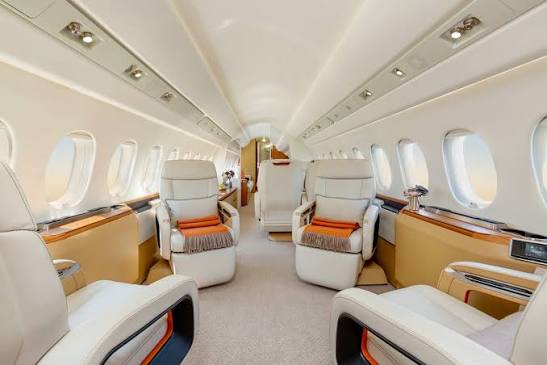
A – How we design the cabin environment in terms of air filtration, lighting and acoustics is important for elevating the passenger experience, health and wellbeing. In the Falcon 6X, this philosophy has played a key role in the selection of materials, textures and finishes to the layout of the furniture, lighting, colour schemes and cabin contours.
The cabin’s flowing, uninterrupted lines, furniture design and spacious living areas create a clean, uncluttered environment that enhances the feeling of spaciousness while supporting both relaxation and productivity on long-range flights.
Lighting is also used to provide a sense of comfort. Smart-controlled mood lighting automatically adjusts colour tones to suit different activities, times of day and seasons, while 30 extra-large windows and an overhead skylight maximise natural light throughout the cabin.
Beyond the interior design, intuitive cabin controls and ergonomic features further enhance passenger comfort and convenience throughout the journey.
Reflecting this design philosophy, the Falcon 6X has received international recognition for its innovative cabin interior, winning both the International Yacht & Aviation Award and the Red Dot: Best of the Best Award.
Q – Passenger expectations continue to evolve, with greater emphasis on comfort, privacy, productivity and wellness. How is Dassault Aviation incorporating these changing preferences into the design of its next-generation business jets?
A – Today, passengers expect the cabin to deliver the same levels of comfort, productivity and privacy they experience on the ground. The Falcon 6X is the first aircraft in the Falcon family to be designed around the cabin, with passenger comfort and wellbeing as key priorities.
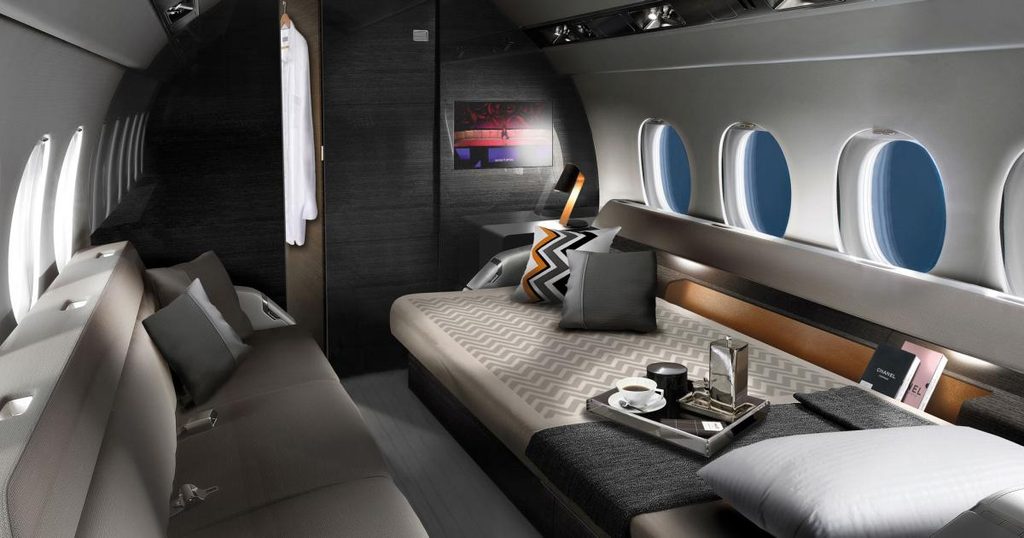
The aircraft features the tallest and widest cabin cross-section of any purpose-built business jet, measuring 1.98 metres in height and 2.58 metres in width. The cabin can comfortably accommodate up to 16 passengers across three separate lounge areas and can be configured to meet passenger requirements, with dedicated spaces for work, dining, rest and entertainment.
Thirty large panoramic windows, together with an industry-first skylight in the galley, maximise natural light throughout the cabin, while adjustable mood lighting helps passengers adapt to different time zones and supports a more comfortable travel experience.
Passenger wellness has also been a major consideration. The Falcon 6X incorporates an advanced environmental control system that filters out air particles and delivers fresh cabin air and precise temperature control.
The aircraft has also been designed for greater airframe pressurization, allowing for lower cabin altitude inside the aircraft. The feeling of being closer to sea level helps you to relax, sleep better, and arrive at your destination feeling refreshed.
The 6X is also among the quietest cabins in the sky with interior sound levels below 50 dB.
Q – Beyond cabin dimensions, what interior innovations or technologies on the Falcon 6X do you believe will have the greatest impact on passenger experience, particularly for long-range business travel?
A – One of the most significant innovations is the Falcon 6X’s low cabin altitude. Although the aircraft cruises at altitudes of up to 41,000 ft, the pressure inside the cabin is equivalent to 3,950 ft, helping to reduce fatigue and enabling passengers to arrive feeling more refreshed after long journeys. The Falcon 6X also flies at higher altitudes than most commercial airliners, allowing it to avoid much of the weather and air traffic, resulting in a smoother and more comfortable flight.
The Falcon 6X also features one of the quietest cabins in business aviation, with interior sound levels below 50 dB. This is achieved through advanced acoustic insulation, low-vibration structural design and the latest-generation Pratt & Whitney Canada PW812D engines, creating a quieter environment for passengers to work, rest or hold meetings in flight.
Air quality is another important aspect of the passenger experience. High-Efficiency Particulate Air (HEPA) and Ultra-Low Particulate Air (ULPA) filters refresh the cabin up to 10 times faster than in a modern office building. Together, these innovations create a healthier, quieter, and more comfortable cabin environment, particularly for long-range business travel.
Q – Connectivity has become an essential part of modern executive travel. How is Dassault Aviation integrating digital technologies and onboard connectivity solutions to create a seamless office and living environment in the sky?
A – When it comes to inflight connectivity, we offer customers a choice of connectivity providers, such as Honeywell, Gogo, Viasat, and more, that utilise low-Earth orbit (LEO) satellites, geostationary satellites, or a combination of both, allowing operators to select the solution that best meets their operational and connectivity requirements.
The Falcon 6X, for instance, is equipped with FalconConnect™, an advanced inflight connectivity system powered by Honeywell. The system provides access to multiple connectivity networks, including 3G/4G on the ground, Wi-Fi, and Viasat Ku- and Ka-band satellite services. This enables passengers to access their emails and large files, stream live content and video conference, and browse the internet even during transoceanic flights.
Q – Sustainability is becoming an increasingly important consideration across business aviation. How is Dassault Aviation balancing environmental responsibility with customer expectations for performance, luxury and long-range capability?
A – Sustainability remains the cornerstone of our operations and influences our design philosophy, making our aircraft more fuel-efficient than comparable-sized business jets in the market.
The Falcon 6X, our latest offering, uses Pratt & Whitney Canada’s PW812D engines, which deliver double-digit improvements in fuel burn, emissions, and noise compared to the previous generation. The engines can operate on a blend of 50% sustainable aviation fuel (SAF), which reduces lifecycle carbon emissions compared to conventional jet fuel and is now available at a growing number of airports.
On the design side, the aircraft’s aerodynamics are optimised to reduce fuel consumption at every phase of flight. The wing, equipped with flaperon control surfaces, improves approach efficiency and reduces the energy needed for landing.
Q – Looking ahead, how do you see business aircraft cabin design evolving over the next decade, and what role will flexibility, personalization and smart cabin technologies play in shaping future executive aircraft?
A – Over the next decade, we expect business aircraft cabin design to become increasingly focused on passenger wellbeing, flexibility and seamless connectivity. Today’s customers are looking for aircraft that not only offer exceptional performance, but also provide a comfortable and productive environment where they can work, relax or rest during long-range flights.
We are also seeing growing demand for more spacious, high-ceiling cabins, greater flexibility in cabin layouts, and personalised interiors that can be tailored to individual preferences. As travel requirements continue to evolve, cabin design will increasingly centre on creating a more personalised yet comfortable passenger experience.
At Dassault Aviation, we have designed the Falcon 6X around the cabin, placing the passenger at the centre of the design. The aircraft combines the tallest and widest cabins in business aviation with multiple lounge spaces, advanced connectivity and wellness features, reflecting the evolution of business aviation cabin design
Q – Finally, as Dassault Aviation continues to strengthen its presence in India and across the Asia-Pacific region, what message would you like to share with operators, customers and the wider business aviation community about the company’s long-term vision and commitment to this important market?
Ans – India is one of the largest and most important business aviation markets in Asia Pacific and remains a key part of Dassault Aviation’s long-term strategy in the region. We have established a strong presence in the country through our Falcon aircraft fleet and our manufacturing partnership in Nagpur, which reflects our long-term commitment to India’s aerospace sector.
Looking ahead, we remain confident in the long-term growth of India’s business aviation market. We expect demand to continue rising in line with GDP trends, enhanced aviation policies and reforms, internationalisation of local enterprises, and increased travel opportunities.
Our commitment to India extends beyond supplying world-class aircraft. We are committed to supporting the development of India’s business aviation industry as well as the overall aerospace sector.