



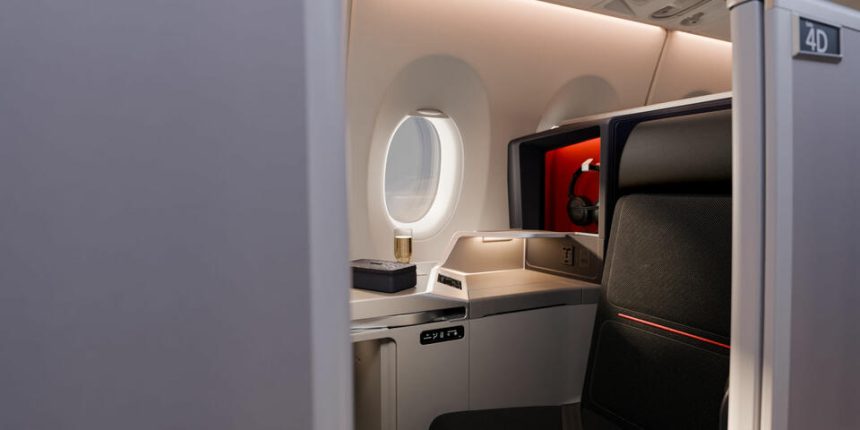
As Delta Air Lines looks ahead to its centennial milestone, it’s not just reflecting on its rich history—it’s reinventing the future of flying. With a sweeping new cabin redesign rolling out across its fleet, the airline is creating an experience that’s not just about getting passengers from point A to point B, but about making them feel truly at home in the sky.
Delta Air Lines is unveiling a comprehensive cabin redesign set to transform the way we fly. With a focus on comfort, style, and functionality, the new cabin interiors will gradually roll out across Delta’s entire fleet over the next few years, marking a significant step forward in aviation design.
Starting with the Boeing 757, Delta’s narrowbody jets will showcase the first iteration of the new cabin design this fall, followed by a fleet-wide rollout across the Airbus A350s beginning in early 2025. The new interiors are not just a facelift—they’re a complete reimagining of what it means to fly with Delta. Fresh seating materials, enhanced lighting, and a new color palette are only the beginning.
This overhaul, which will span several years, is about more than fresh materials and sleek aesthetics. It’s about crafting an entire experience that enhances the way we travel—one that addresses everything from ergonomics to sustainability, and from modern design to customer satisfaction.
Behind the Design: The Teams Who Make It Happen
The real magic happens in the Onboard Experience (OBX) and Cabin Engineering teams, who collaborate closely to bring the redesign vision to life. Enter the team behind the scenes: the Onboard Experience (OBX) team. These are the people who bring Delta’s vision to life, making sure everything from the seats to the walls to the lighting is on point. According to Michael Steinfeld, Manager of Onboard Products at Delta, this is more than just picking pretty colors and comfy fabrics. It’s about designing a space that’s functional, comfortable, and stylish, no matter the flight length.
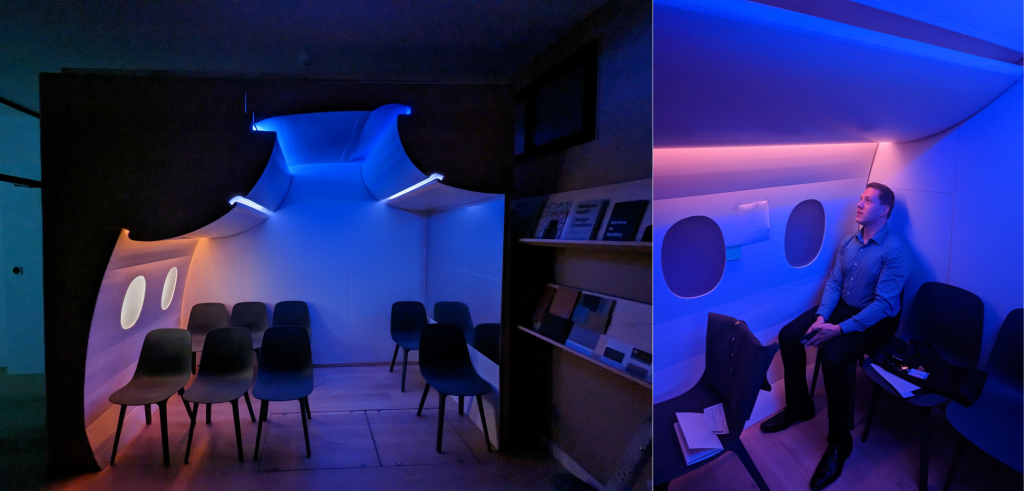
“At Delta, we like to think of the process as a full-on collaborative experience,” says Michael Steinfeld, Manager of Onboard Products. “If you were to flip the airplane upside down, everything that stays is considered the ‘hard product’—the seats, the walls, the carpet—everything that passengers physically interact with.”
Steinfeld’s team doesn’t just conceptualize; they spend years canvassing Delta’s fleet, interviewing customers, and analyzing different aircraft variations to ensure the redesign is universal across the airline’s expansive network. For the OBX team, it’s about reimaging every detail, down to the screws in the walls.
“From color and texture to how passengers interact with their seats, we went through thousands of samples, testing everything—lighting, seat materials, even carpet fibers,” Steinfeld explains. “The aim is to make every flight feel like a sanctuary. Whether you’re on a quick domestic flight or a long-haul transatlantic trip, we want you to feel relaxed and refreshed the minute you step on board.”
A Focus on Function Meets Style
While the aesthetic transformation is the most visible part of the redesign, Delta’s Cabin Engineering team is equally critical in ensuring that the redesign can withstand the challenges of daily use and the wear and tear of high-volume air travel. From testing materials to simulating real-world conditions (like dropping bags and dragging backpacks across seats), the engineering team rigorously tests everything to make sure it’s not just beautiful but durable.
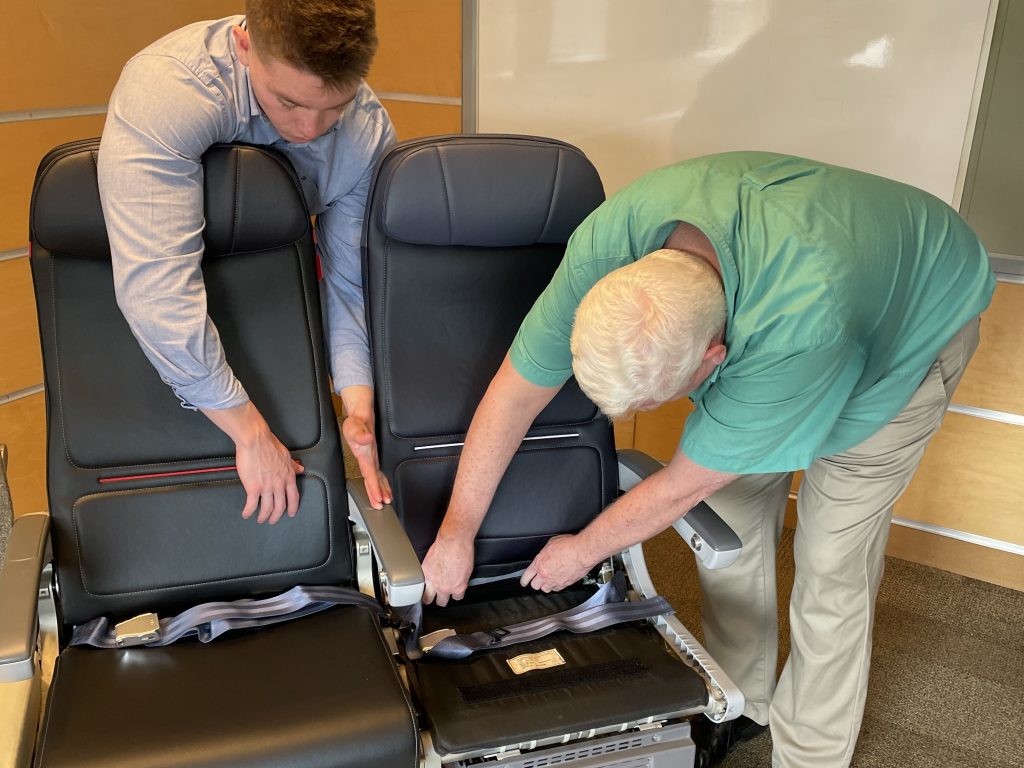
“We love the look of a material, but the real test is how it handles the daily realities of travel,” says Tabb Pearson, Manager of Cabin Engineering. “For instance, we found a seat fabric we liked, but during testing, we realized that a simple texture change caused bags to wear it out much quicker. That’s when we knew it wasn’t right. It has to look good and stand up to real-world use.”
In other words, every inch of the cabin interior, from the seat covers to the carpet, is carefully engineered to meet the demands of both comfort and longevity. The result is a space that’s visually stunning, comfortable, and designed to last, no matter how many miles it’s flown.
Delta Dark Blue: A Nod to the Past, A Step into the Future
One of the most noticeable changes to the cabin’s aesthetic is the introduction of a new color palette, anchored by Delta Dark Blue. For years, Enchanted Blue has been Delta’s signature color for seats, but as the airline heads into its second century, the design team felt it was time for a refresh. The new dark blue hue is designed to feel modern, comforting, and timeless—bringing a sense of elegance to every flight.
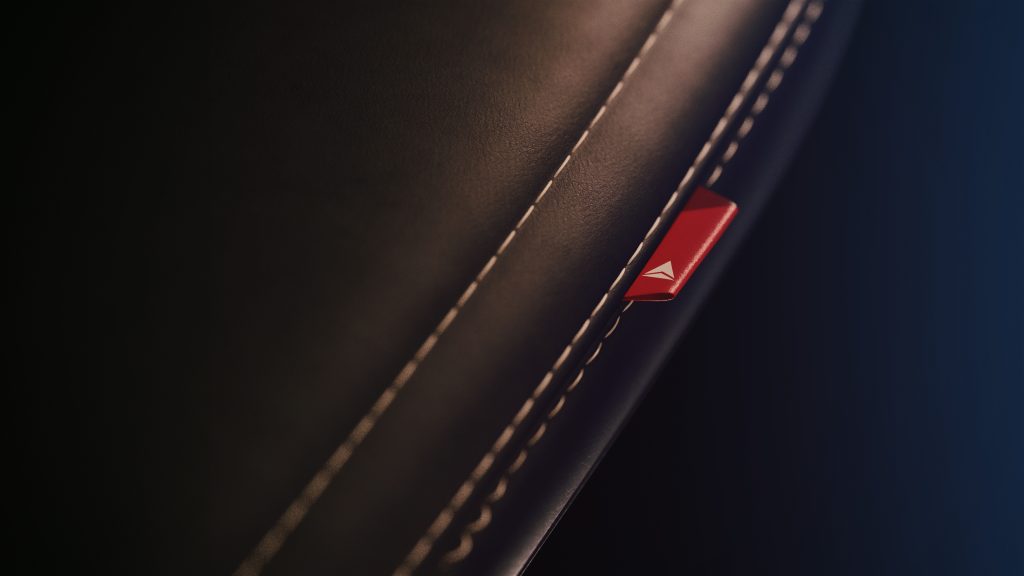
But color isn’t just about looks. The redesigned cabins will feature a “thread of red” in premium cabins, used as a subtle accent to highlight customer features like extra seat pockets or the location of headphones. It’s about ensuring passengers don’t just sit back and relax, but feel like the space is designed just for them.
Attention to Detail: From Seat to Carpet
While the seat might be the most important element in any flight, Delta’s attention to detail extends beyond the obvious. Take the carpet, for example—this is the part of the cabin that endures the most wear and tear. It’s not just about choosing a nice design; the carpet must withstand heavy foot traffic, frequent spills, and even the occasional snack-related disaster.

“We tested every single material thoroughly to make sure it could handle the daily grind,” says Pearson. “The carpet had to be not just easy on the eyes but practical—easy to maintain, durable, and able to resist stains from spilled snacks.”
The End Goal: A Sky-High Sanctuary
Ultimately, every decision made during the redesign process is about one thing: creating an environment that feels elevated and welcoming for every passenger. Whether it’s the seat materials, the lighting, or even the carpet, Delta’s cabin redesign is designed to make you feel as comfortable in the sky as you do on the ground.
“We’re passionate about this project because we know the flying experience is so much more than just getting from A to B,” says Alexandra Douglas, General Manager of Cabin Engineering and Programs. “This redesign is about creating a space where passengers feel comfortable, relaxed, and—most importantly—cared for.”
As Delta’s cabin redesign continues to roll out across its fleet, passengers can expect to feel the difference from the moment they step onboard. This is more than just a new look; it’s a promise that flying with Delta will be an experience that’s both premium and personal, for every traveler, on every flight.