


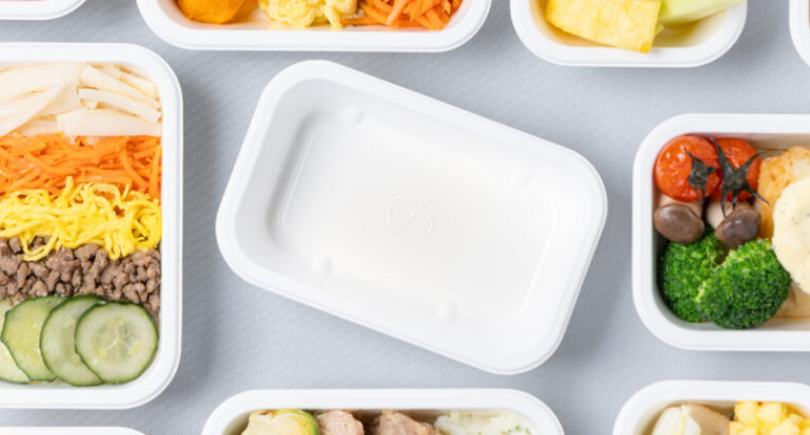
Korean Air is all set to modernise its in-flight dining experience with the rollout of new eco-friendly meal containers, replacing the plastic-based units it has used for nearly 20 years. Beginning December, the airline will gradually introduce entrée containers made from plant-derived, non-wood pulp sourced from materials such as straw, sugarcane and bamboo.
The transition marks a major step in the airline’s sustainability roadmap, which aims to reduce plastic consumption and support the industry’s broader decarbonisation goals. After an initial phase on select international routes, Korean Air plans to expand the new containers across its entire global network by the end of 2026.
Designed primarily for economy-class Korean and Western main courses, the new containers offer a more sustainable alternative to conventional plastic or paper-based options. In addition to being fully plant-based and not requiring tree-based pulp, they are engineered to withstand high temperatures and maintain structural integrity during onboard heating.
Korean Air estimates the switch will cut related carbon emissions by approximately 60%.
“This transition to new in-flight meal containers is an essential long-term investment in environmental protection and sustainable operations,” a Korean Air spokesperson said. “We will continue advancing our sustainability efforts in line with global industry trends while improving the onboard experience for our customers.”
The move builds on several environmentally focused initiatives across the airline’s cabin and catering operations. In 2023, Korean Air replaced single-use plastic cutlery with bamboo alternatives and introduced unbleached bamboo-fibre napkins. The airline has also expanded its upcycling programmes, turning retired crew uniforms into medical pouches and repurposing phased-out in-flight blankets into reusable hot-water bag covers.
Together, these initiatives reflect Korean Air’s commitment to reducing cabin waste, extending the lifecycle of onboard materials and embedding sustainability into the passenger experience.