


In one of the most ambitious fleet and cabin modernisation programmes in commercial aviation, United Airlines has announced plans to induct more than 250 new aircraft by 2028, alongside the introduction of multiple next-generation cabin products aimed at redefining the passenger experience across all segments.
The announcement marks a significant evolution of the airline’s long-term “United Next” strategy, with a clear emphasis on premiumisation, cabin differentiation, and product consistency across both widebody and narrowbody fleets.
Bridging the gap
Widebody experience on narrowbody aircraft
A key highlight of the programme is United’s push to bring widebody-style comfort to narrowbody aircraft through the introduction of new subfleets, including the “Coastliner” Airbus A321neo and the long-range Airbus A321XLR.
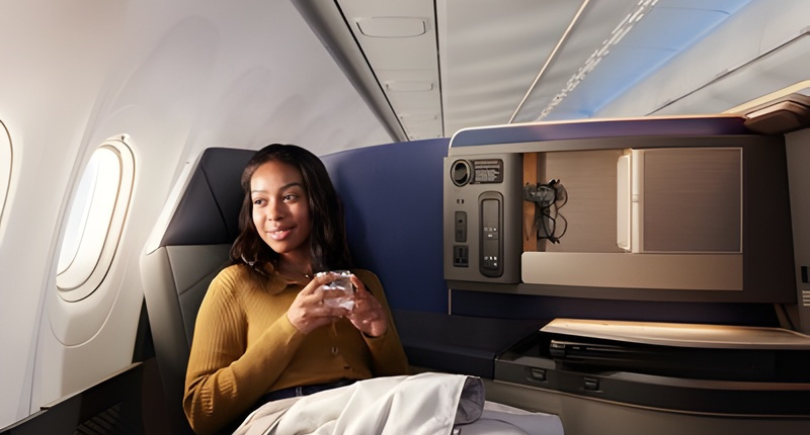
Both platforms will feature the airline’s “Elevated” interior and introduce lie-flat, all-aisle-access business class seating under the United Polaris brand, an industry-first configuration for narrowbody aircraft in North America. The patented seat design, developed over five years, focuses on enhanced personal space, improved ergonomics, and a balance between privacy and openness through semi-translucent suite dividers.
Also Read – AkzoNobel Aerospace launches single-coat Aerobase Solution to boost MRO efficiency and performance
The Coastliner variant, designed specifically for high-density transcontinental routes, will operate between key hubs such as Los Angeles, San Francisco, and Newark/New York. Notably, it will introduce Polaris business class and lounge access on domestic routes, blurring traditional distinctions between domestic and international premium travel.
Reconfiguring cabin hierarchies
From a cabin interiors perspective, the new configurations reflect a deliberate shift towards multi-tiered product segmentation. The Coastliner A321neo will feature:
- 20 lie-flat Polaris seats
- 12 premium economy (United Premium Plus) seats—a first for domestic narrowbody operations
- 129 economy seats
The removal of standard seating to accommodate a self-service snack bar in the economy cabin signals a broader move towards experiential design, where passenger autonomy and comfort are prioritised alongside density optimisation.
Similarly, the A321XLR will offer 32 premium seats, double that of the Boeing 757 aircraft it replaces, highlighting the growing importance of premium seating as a revenue driver.
Elevated interiors
United is also advancing its widebody cabin strategy with the introduction of the “Elevated” interior on the Boeing 787-9 Dreamliner.
The redesigned aircraft features 99 premium seats and introduces the new Polaris Studio suites, 25% larger than standard Polaris seats and equipped with privacy doors, companion ottomans, wireless charging, Bluetooth connectivity, and 27-inch 4K OLED seatback screens, the largest currently offered by a US carrier.
Across all cabins, the airline is standardising high-definition displays, with screen sizes ranging from 13 inches in economy to 19 inches in Polaris, reinforcing the importance of in-flight entertainment as a core component of the passenger experience.
The introduction of retail-style amenity kits, curated dining experiences, and enhanced bedding further underscores the airline’s strategy of aligning onboard products with premium hospitality standards.
Reinventing the regional experience
At the regional level, United is rethinking cabin layouts with the introduction of the CRJ450, a redesigned version of the CRJ200 aimed at delivering a more premium, boutique flying experience.
Operated by SkyWest Airlines, the 41-seat aircraft will feature a spacious United First cabin with the removal of overhead bins in favour of a dedicated luggage closet, an uncommon design choice that enhances perceived space and comfort.
The aircraft will also offer larger overhead bins in economy and consistent interior finishes aligned with mainline aircraft, reflecting a growing trend towards product harmonisation across fleet types.
Digital integration and passenger-centric enhancements
Beyond physical cabin upgrades, United is investing heavily in digital and service enhancements. These include the rollout of Starlink Wi-Fi across its fleet, offering high-speed connectivity comparable to ground-based internet, and the expansion of seatback screens across more than 1,200 aircraft.
Additional improvements include upgraded soft products such as redesigned blankets and earbuds in economy, enhanced food and beverage offerings through partnerships with global culinary platforms, and a continuously evolving mobile app ecosystem featuring real-time passenger support tools.
Scale
Since 2021, United has already inducted a significant number of aircraft, including Boeing 787 Dreamliners, Boeing 737 MAX aircraft, and Airbus A321neos, while retrofitting a majority of its narrowbody fleet and increasing premium seat availability across North America.
The addition of over 250 aircraft in the next two years represents the largest such induction programme by any airline within that timeframe, signalling an aggressive push to capture premium market share while maintaining scale.
From an aircraft interiors standpoint, the programme reflects several key industry trends:
- The convergence of narrowbody and widebody passenger experiences
- Increased focus on premium seating density and monetisation
- Integration of digital technologies to enhance passenger engagement
- Greater emphasis on flexible, modular cabin configurations
Setting a new benchmark in cabin innovation
As airlines globally compete to differentiate their onboard products, United’s latest initiative highlights the growing importance of interiors as a strategic lever for customer loyalty and revenue growth.
By combining large-scale fleet renewal with targeted cabin innovation, the airline is positioning itself at the forefront of next-generation passenger experience design, setting new benchmarks for how comfort, technology, and commercial strategy intersect in modern aviation.