


Wizz Air has implemented an integrated digital cabin platform across its fleet in partnership with Immfly and Gateretail, combining onboard retail, connectivity and operational systems.
The deployment forms part of the airline’s digitalisation programme, focusing on inflight retail functionality, passenger connectivity and data integration.
The platform includes Bluetooth-enabled in-seat ordering, now deployed across Wizz Air’s fleet of more than 260 Airbus A320 and A321 aircraft. Passengers can use their personal devices to browse and purchase onboard products through the airline’s mobile application without requiring an internet connection.
Also Read – Airbus ACH140 secures launch customers
Orders are transmitted to cabin crew via Bluetooth, enabling real-time processing and reducing reliance on traditional onboard sales methods. Jose Lirio, VP at Gateretail, said the system is intended to streamline onboard retail and improve service efficiency by providing crew with real-time order visibility.
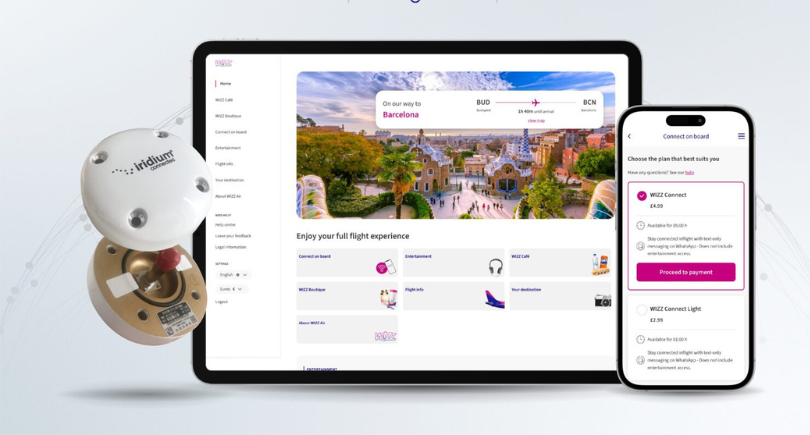
A six-month trial of low-bandwidth connectivity has also been launched on five UK-based aircraft. The system is based on Immfly’s Equilux onboard server and satellite connectivity provided via Iridium Communications.
The trial will support limited onboard services, including wireless inflight entertainment transactions, messaging, payment authorisation and access to flight information and moving maps.
The platform integrates inflight entertainment, retail and connectivity into a single system. This enables passengers to access digital content, make purchases and receive real-time flight updates through a unified interface on personal devices. Fernando Guinea, President of Immfly, said the system combines retail, connectivity and operational data within a single onboard platform.
In addition to passenger-facing features, the system includes cockpit integration for operational data exchange, supporting functions such as route planning and fuel monitoring. Ian Malin, Chief Commercial Officer at Wizz Air, said the initiative is focused on expanding digital capabilities while improving service delivery within a low-cost operating model.
The deployment reflects a broader shift among low-cost carriers towards device-based inflight entertainment and digital retail systems, reducing reliance on embedded seatback hardware while expanding onboard functionality.