


As airlines worldwide search for the delicate balance between revenue generation and passenger satisfaction, Alaska Airlines has completed a fleet-wide cabin transformation that demonstrates how modern aircraft interiors are evolving beyond simple seat upgrades. After nearly two years of intensive retrofit activity, the carrier has successfully refreshed more than 200 Boeing 737 aircraft, creating a standardized cabin product that places premium seating, passenger convenience, and digital connectivity at the centre of the travel experience.
While fleet modernization programmes are common across the industry, Alaska’s initiative stands out for its scale, speed, and strategic focus on cabin design as a commercial differentiator. The project reflects a growing industry belief that interior architecture is no longer merely a product feature, it is increasingly a revenue strategy.
Premiumization moves to the front
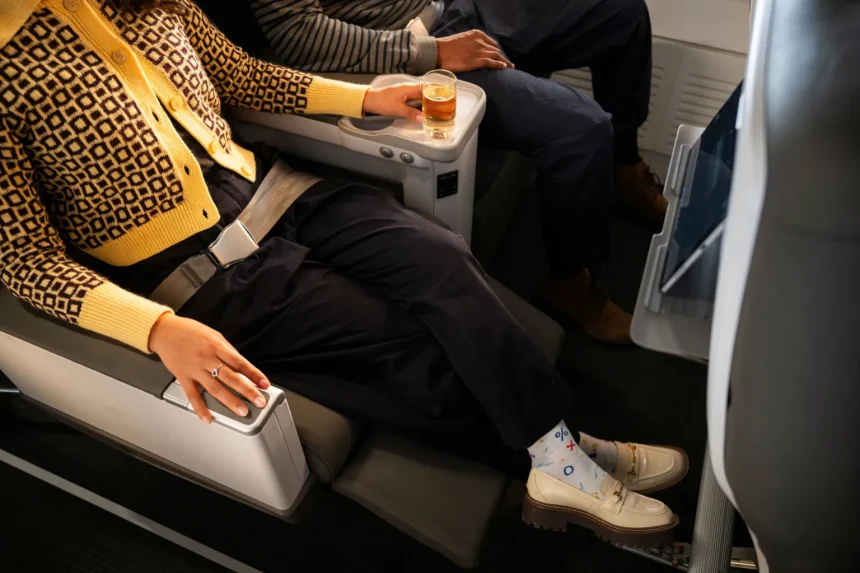
The most visible aspect of the redesign is the expansion of premium seating across the fleet. Alaska Airlines has increased first-class capacity on its Boeing 737-800 and 737 MAX 8 aircraft from 12 to 16 seats, while larger 737-900ER and 737 MAX 9 variants now feature expanded Premium Class sections with 30 seats instead of the previous 24.
This shift mirrors a broader trend across North American aviation, where carriers are allocating more cabin real estate to higher-yield seating products. Premium cabins are no longer reserved solely for long-haul operations; they have become a critical revenue source on domestic and regional routes as passengers increasingly demonstrate a willingness to pay for additional comfort, priority services, and personal space.
From a cabin design perspective, Alaska’s approach highlights how airlines are reconfiguring narrowbody interiors to create more differentiated passenger experiences while maximizing aircraft economics.
Recaro seating brings consistency
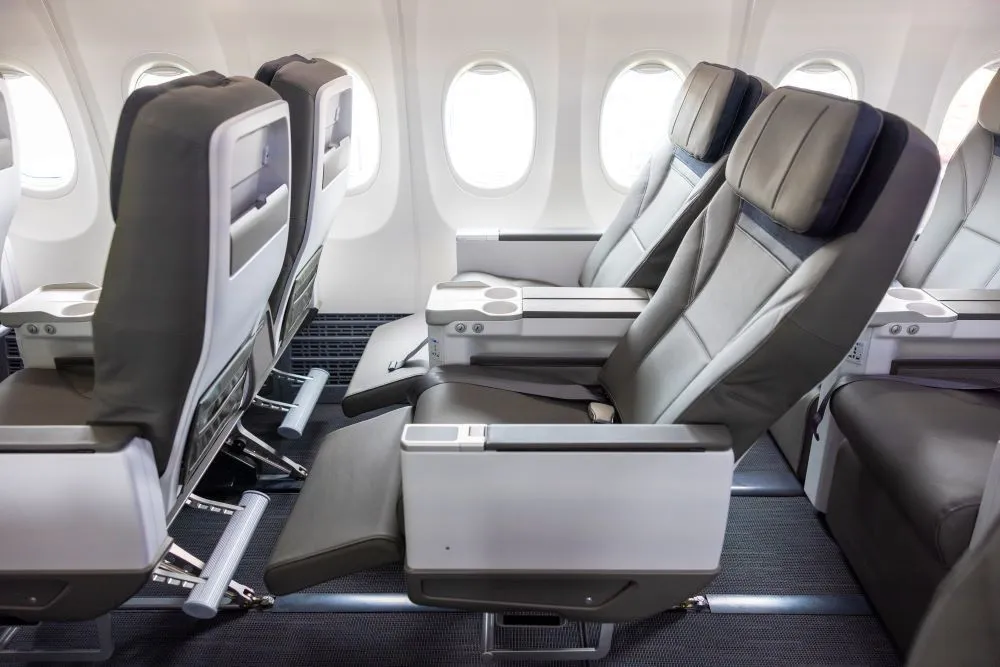
Beyond seat counts, the airline has invested heavily in creating a unified seating experience throughout its Boeing 737 operation. New Recaro seats have been installed across multiple aircraft variants, bringing improved ergonomics and a more contemporary appearance to the cabin.
Seat manufacturers today are tasked with delivering products that balance comfort, durability, weight reduction, and maintenance efficiency. The adoption of modern slimline seating allows airlines to optimise cabin layouts while still providing improved passenger comfort through enhanced cushioning, refined seat geometry, and better support.
For Alaska Airlines, standardizing seating across the fleet also simplifies maintenance, crew familiarity, and spare-parts management while presenting passengers with a consistent brand experience regardless of aircraft type.
Designing around the digital passenger
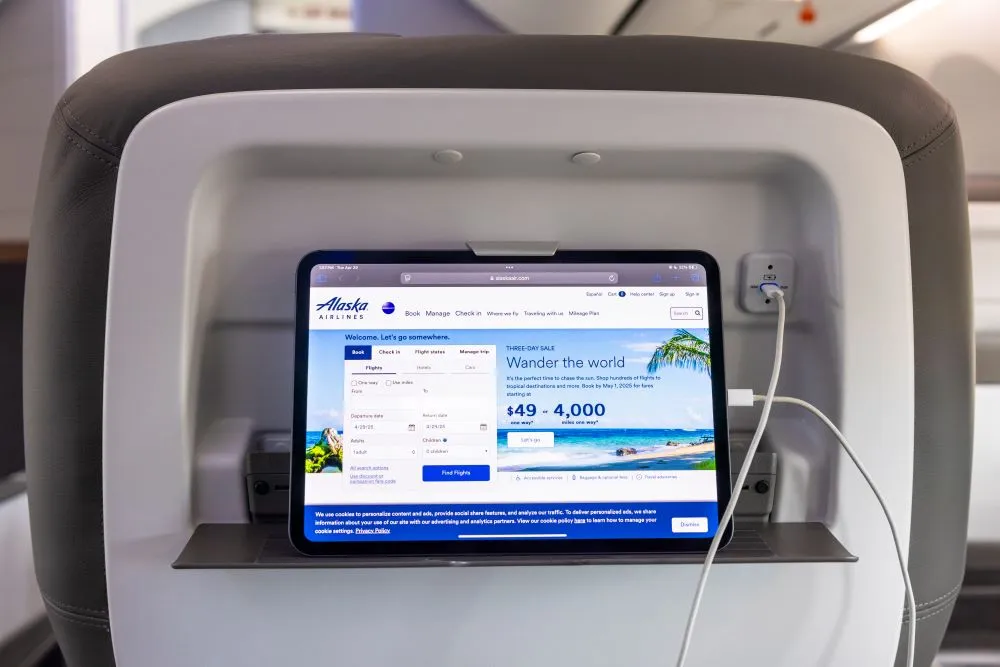
Perhaps the most significant aspect of the cabin refresh is the emphasis on personal technology integration. Modern travellers increasingly rely on smartphones and tablets as their primary source of entertainment, productivity, and communication during flight. Recognising this behavioural shift, Alaska Airlines has equipped every seat with an integrated device holder, allowing passengers to position personal electronics comfortably for extended use.
The airline has also introduced high-power USB-C charging capability throughout much of the fleet, reflecting the growing transition away from older USB-A standards. More importantly, charging ports have been repositioned to improve accessibility, addressing a common passenger frustration where power outlets are difficult to locate or reach during flight.
These enhancements illustrate how aircraft interiors are evolving to support passenger-owned technology rather than relying exclusively on traditional in-flight entertainment systems.
The power of cabin aesthetics
While connectivity and seating often receive the most attention, visual design plays an equally important role in shaping passenger perception.
Alaska Airlines has refreshed cabin interiors with new leather upholstery and carpeting, creating a cleaner, brighter, and more contemporary environment. Such upgrades may appear cosmetic, but they contribute significantly to perceived aircraft quality and passenger satisfaction.
Across the industry, airlines are increasingly using material selection, texture, and colour consistency to reinforce brand identity and create a sense of modernity, even within existing aircraft platforms. A refreshed cabin can dramatically alter passenger impressions without requiring major structural modifications.
Solving one of biggest frustrations
One of the more innovative aspects of the programme addresses a surprisingly simple issue: overhead bin space. For Premium Class passengers, Alaska Airlines has introduced dedicated overhead-bin reservation placards that help ensure storage remains available for travellers seated in premium sections. The measure targets one of the most common pain points in contemporary air travel, particularly on high-load domestic flights where overhead-bin competition can significantly impact the boarding experience.
The initiative demonstrates how passenger experience improvements do not always require major investments. Often, thoughtful operational and interior-design solutions can have a disproportionate impact on customer satisfaction.
Post-merger cabin harmonisation
The timing of the programme is equally significant. Following its merger with Hawaiian Airlines, Alaska Airlines is now tasked with integrating fleets, products, and customer experiences across a larger network.
Creating a standardized Boeing 737 cabin provides a strong foundation for that effort while establishing a consistent product for passengers travelling throughout the combined airline’s domestic network. Alaska has already indicated that similar modernization efforts are planned for Hawaiian Airlines’ Airbus A330 fleet, signalling that cabin harmonisation will be a major focus of the carrier’s future strategy.
For airline interior specialists, the programme serves as a compelling example of how fleet integration can be used as an opportunity to redefine onboard experiences rather than simply align operational standards.
The new narrowbody playbook
Alaska Airlines’ fleet-wide cabin transformation underscores a larger shift occurring across commercial aviation. Modern aircraft interiors are no longer judged solely by seat pitch or cabin density. Today’s passengers expect power access, personal-device integration, intuitive storage solutions, modern aesthetics, and clearly differentiated premium experiences.
By combining these elements into a single fleet-wide initiative, Alaska Airlines has created more than a refreshed cabin, it has developed a blueprint for how narrowbody interiors can evolve to meet the demands of both passengers and airline business models.
As airlines continue to compete for customer loyalty in an increasingly experience-driven marketplace, cabin design is becoming one of the industry’s most powerful strategic tools. Alaska Airlines’ latest transformation demonstrates that the future of aircraft interiors lies not in one breakthrough innovation, but in the careful integration of multiple passenger-centric improvements into a cohesive and commercially effective cabin environment.