


New workflow enables airlines and MRO providers to recreate obsolete cabin components faster using 3D scanning and intelligent CAD technology
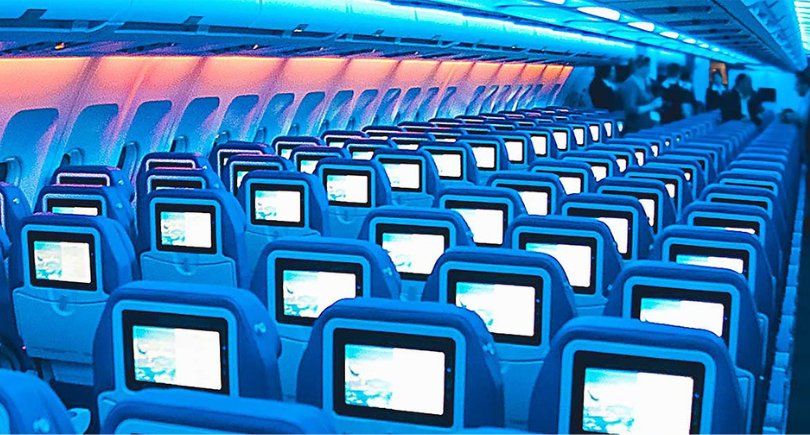
Aircraft interiors are becoming increasingly difficult to maintain as ageing fleets remain in service longer and many original cabin components become obsolete. Addressing this challenge, Hexagon has introduced a new rapid reverse-engineering workflow that enables airlines and MRO providers to recreate replacement cabin parts quickly and accurately, even when original CAD data is unavailable.
Developed by Hexagon’s Portable Metrology Division, the solution combines handheld 3D scanning with intelligent reverse-engineering software to significantly reduce the time required to reproduce damaged or discontinued cabin components such as seat shrouds, armrests, tray tables and galley fittings.
Growing challenge for cabin refurbishment
As airlines continue investing in cabin refurbishment rather than fleet replacement, sourcing replacement parts for older aircraft has become increasingly challenging. Many legacy cabin components are no longer manufactured, while original engineering drawings or CAD files may no longer exist.
Traditionally, engineers have relied on manual measurements or outdated documentation to reproduce these parts—a process that is often slow, labour-intensive and prone to inaccuracies. Although 3D scanning has offered an alternative, converting scan data into usable CAD models has typically required specialist expertise and extensive manual redesign.
Hexagon’s latest workflow aims to simplify this process, allowing maintenance teams to produce fully editable digital models in a fraction of the time.
From Scan to CAD in hours
At the heart of the new solution is Geomagic Design X, Hexagon’s reverse-engineering software platform, which integrates directly with handheld 3D scanners. The software incorporates automated tools such as Region Segmentation, Modelling Wizards, Auto Sketch and NURBS surfacing to convert complex scan data into parametric CAD models complete with design history.
According to Hexagon, the workflow can reconstruct components three to eight times faster than conventional scan-based reverse-engineering methods, enabling engineers to move quickly from damaged part to production-ready digital model.
The completed models can then be exported directly into widely used engineering platforms including SolidWorks, Siemens NX, Autodesk Inventor and PTC Creo, allowing replacement parts to be manufactured through conventional machining or additive manufacturing with minimal additional engineering.
Portable technology
Designed specifically for MRO environments, the solution features the Atlascan Pro handheld scanner, enabling technicians to capture accurate measurements from virtually any angle, even inside aircraft cabins or under challenging hangar conditions.
An integrated Accuracy Analyzer continuously compares the reconstructed CAD model against the original scan data throughout the design process, helping minimise dimensional errors and reducing the need for costly rework during installation.
Importantly, Hexagon says the workflow has been developed to be accessible to manufacturing engineers and MRO technicians without requiring specialist reverse-engineering expertise.
On-Demand cabin manufacturing
According to Aziz Tahiri, Global Director for Aerospace and Defense at Hexagon, reverse engineering is becoming an increasingly important capability as airlines seek faster ways to maintain ageing cabin interiors.
He noted growing interest from defence operators in mobile repair units that combine 3D scanners, reverse-engineering software and 3D printers within deployable workshops, allowing damaged aircraft components to be scanned, redesigned and manufactured directly at operating locations.
Tahiri said the combination of Geomagic Design X and portable scanning technology enables engineers to recreate complex aircraft components within hours, significantly improving maintenance productivity.
Smarter cabin MRO
As airlines extend aircraft service lives and accelerate cabin refurbishment programmes, digital manufacturing technologies are becoming increasingly valuable across the aircraft interiors sector.
Rapid reverse engineering not only reduces dependence on legacy drawings and discontinued suppliers but also supports more responsive maintenance planning, shorter aircraft downtime and greater flexibility in producing replacement components on demand.
While integrating the technology into existing maintenance workflows will require operational adaptation, Hexagon’s latest solution reflects a broader shift towards digitalisation and advanced manufacturing within cabin MRO.
With airlines placing greater emphasis on lifecycle extension, sustainability and operational efficiency, intelligent reverse-engineering technologies are expected to play an increasingly important role in helping operators maintain ageing aircraft interiors while reducing repair times and improving component availability.