



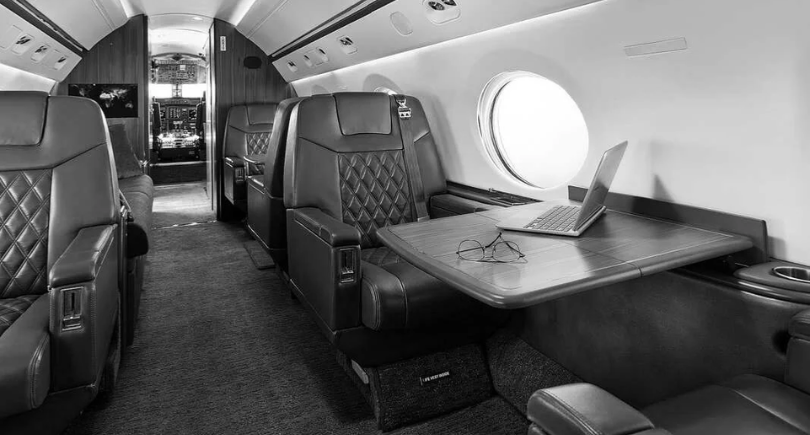
As passenger expectations continue to evolve, high-speed onboard connectivity is rapidly shifting from a premium amenity to an essential component of the private aviation experience. Driven by technologies such as Starlink, the satellite internet service developed by SpaceX, operators are increasingly viewing seamless internet access as a key differentiator in delivering a modern, connected cabin environment.
The trend reflects a broader transformation in business aviation, where passengers expect the same digital experience in the air as they enjoy on the ground. Whether conducting virtual meetings, streaming entertainment, accessing cloud-based applications or staying connected with colleagues and family, uninterrupted broadband connectivity is becoming central to the overall cabin experience.
Industry momentum continues to build. According to a recent Reuters report, Starlink has secured 11 new airline customers this year, with agreements covering more than 7,000 aircraft, underlining the growing demand for next-generation satellite connectivity across both commercial and business aviation.
For business aviation operators, onboard connectivity is increasingly becoming a key consideration during aircraft selection, particularly for long-range international missions. Alongside cabin size, interior comfort, range and service levels, passengers are placing greater value on aircraft equipped with reliable, high-speed internet capable of supporting productivity throughout the journey.
However, widespread adoption remains a gradual process. Certification requirements, installation programmes and individual fleet upgrade strategies continue to influence how quickly advanced connectivity solutions are introduced across different aircraft types and operators.
For Chapman Freeborn, the growing interest in advanced connectivity reflects changing customer priorities across the India, Middle East and Africa (IMEA) region, where business travellers and VIP clients increasingly expect uninterrupted digital access during flight.
“People have become used to being always connected. As more scheduled airlines offer onboard connectivity, clients increasingly expect the same level of service when flying privately,” said Claudia Krajhanzl, Vice President Passenger – IMEA at Chapman Freeborn.
“For now, high-speed connectivity is not yet available across every private aircraft, but it is fast moving towards becoming an expected standard, especially on long-haul flights. Demand is currently stronger on long-haul flights than on shorter regional sectors, where connectivity may be less decisive,” she added.
Reliable inflight connectivity is also reshaping the value proposition for corporate travellers. Continuous internet access enables passengers to remain productive throughout the journey, participate in live video conferences, respond to time-sensitive business requirements and collaborate with teams in real time without interrupting their travel schedule.
As a result, charter providers are increasingly incorporating connectivity into discussions with clients when recommending aircraft. While factors such as range, cabin configuration, operational flexibility and availability remain fundamental, digital connectivity is emerging as an equally important element of the premium onboard experience.
The evolution of inflight connectivity highlights a broader shift in aircraft interiors, where cabin technology is becoming as significant as physical comfort. As satellite-based broadband solutions continue to mature and installations expand across more fleets, seamless, high-speed internet is expected to become a defining feature of next-generation business aviation cabins, setting new benchmarks for passenger experience and inflight productivity.