



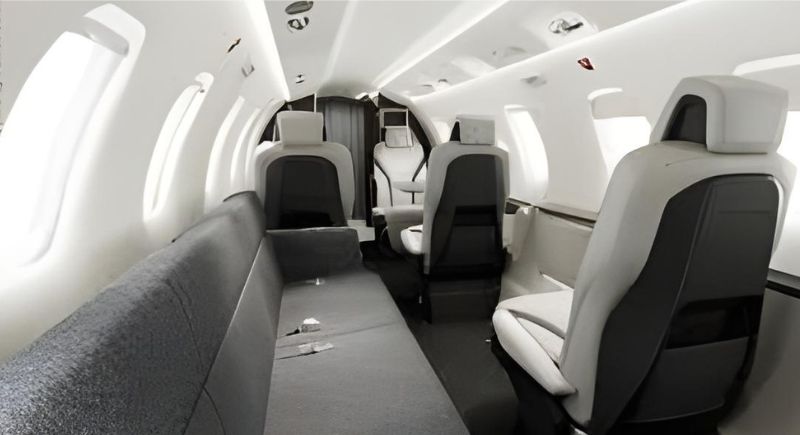
Pilatus has recently partnered with F/LIST for the first-ever mock-up of a PC-24 cabin interior designed with environmentally friendly materials. Transparent F/LAB Natural Oil not only minimizes the release of harmful volatile organic compounds (VOCs) into the environment, but it also highlights the beauty of the wood veneers – the matt sheen and tangible grain bring out the natural patterns and swirls. The oil-treated surface is designed to last; its scratch and stain-resistant properties facilitate regular use with minimal maintenance.
Most of the fabrics used by Pilatus in today’s luxurious interiors are made from special fibers. They are easy to clean and they keep their shape after washing. The washing process requires substantially less water and detergent, while fast drying uses less energy as well. Additionally, the material can be recycled.
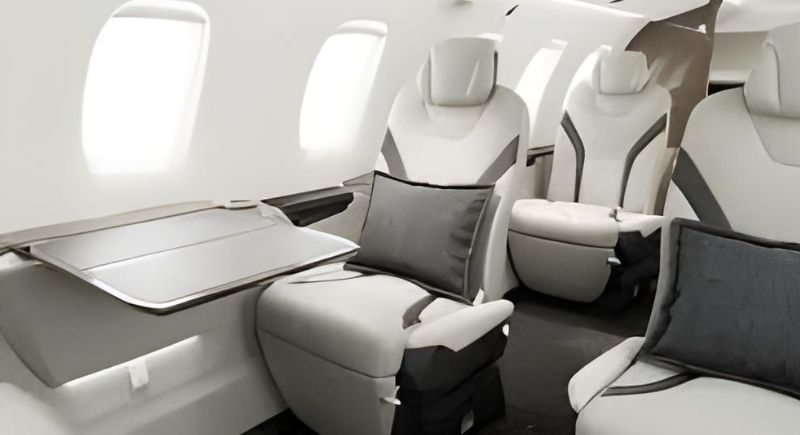
Pilatus is committed to sustainability as demonstrated by the use of environmentally friendly materials in the cabin interior of the PC-24, including natural oils instead of synthetic varnishes.
Equipped with state-of-the-art technology, the PC-24 also offers passengers the highest level of comfort: a bright, spacious cabin, a flat floor, first-class workmanship, and a wide choice of materials.
The carpeting, which is made entirely from natural wool, is another example. As a renewable and biodegradable fiber, pure new wool is one of the world’s cleanest and most environmentally friendly flooring materials. For its most environmentally-conscious clients, Pilatus offers a collection of carpets made without any artificial dyes at all.
André Zimmermann, vice president, Business Aviation at Pilatus, stresses: “We make every effort to constantly improve what we offer our customers, and we strive to reduce our environmental footprint without compromising on quality or performance.”
In addition, Pilatus continues to invest in sustainable aviation fuel (SAF used for its fleet.
Pilatus aircraft are already certified to use sustainable aviation fuel (SAF), which is currently produced primarily from biomass or waste materials. Aiming to accelerate the scaling of solar fuels in aviation, Pilatus and Synhelion announced the start of their strategic partnership in the summer of 2024. Under the purchase agreement, Pilatus has committed to buying 200 tons of solar fuel every year for five years, effective from 2027. Pilatus plans to use the solar-derived fuel in its fleet and intends to offer it to PC-12 and PC-24 customers at a later date.