


Every aircraft tells a story. For Emirates, that story is no longer just about connecting destinations; it is about reinventing the onboard experience for millions of passengers without waiting for the next generation of aircraft to arrive.
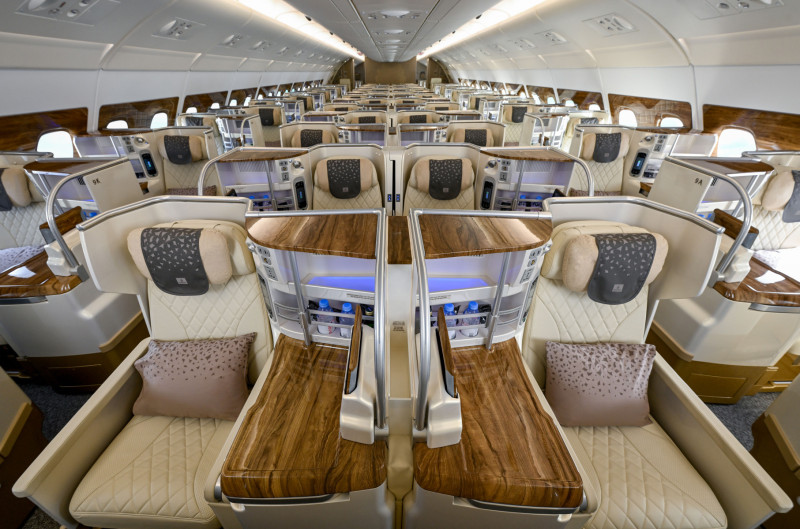
Less than four years after embarking on one of the aviation industry’s most ambitious cabin modernisation projects, Emirates has crossed a remarkable milestone: 100 widebody aircraft have now undergone complete cabin refurbishment, making it the largest known aircraft retrofit programme undertaken by any airline worldwide.
Since work commenced in November 2022, Emirates has completely transformed 47 Airbus A380s and 53 Boeing 777s, investing more than 4.4 million engineering man-hours over 44 months to deliver a consistent premium passenger experience across its fleet.
The achievement marks another significant step in the airline’s US$5 billion retrofit programme, which will eventually cover 219 aircraft, ensuring Emirates continues to offer one of the world’s most modern and luxurious cabin products even before its next-generation fleet enters service.
A complete cabin transformation
Unlike routine cabin refresh programmes, Emirates’ retrofit initiative involves a complete nose-to-tail reconstruction of the aircraft interiors. Each aircraft entering the Emirates Engineering hangars is almost entirely stripped of its cabin components before undergoing a meticulous rebuild.
For every Airbus A380, engineers work with more than 4,000 individual parts, while each Boeing 777 retrofit involves over 2,500 cabin components. From redesigned seating layouts and premium finishes to upgraded monuments, lighting, flooring and cabin furnishings, every element is carefully reinstalled to create a consistent onboard product across the airline’s long-haul fleet.
The programme is being carried out entirely in-house by Emirates Engineering in Dubai, involving more than 400 engineers and technicians working with precision to ensure every aircraft returns to service on schedule.
Premium economy
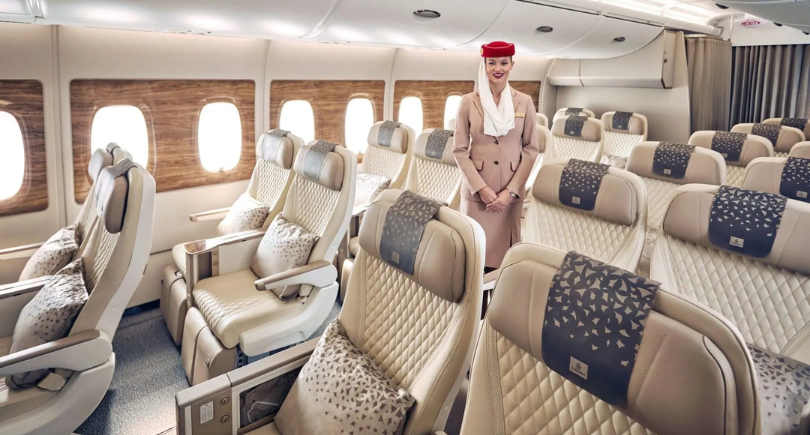
One of the defining features of the retrofit programme has been the accelerated rollout of Premium Economy, a product that has quickly become one of Emirates’ most sought-after cabin offerings. Every retrofitted aircraft now features the airline’s award-winning Premium Economy cabin, bringing enhanced comfort to a growing number of routes across the network.
To date, Emirates has installed more than 3,800 Premium Economy seats as part of the programme, significantly expanding passenger access to the cabin between Business and Economy Class. The introduction of Premium Economy has also required major structural redesigns inside the aircraft.
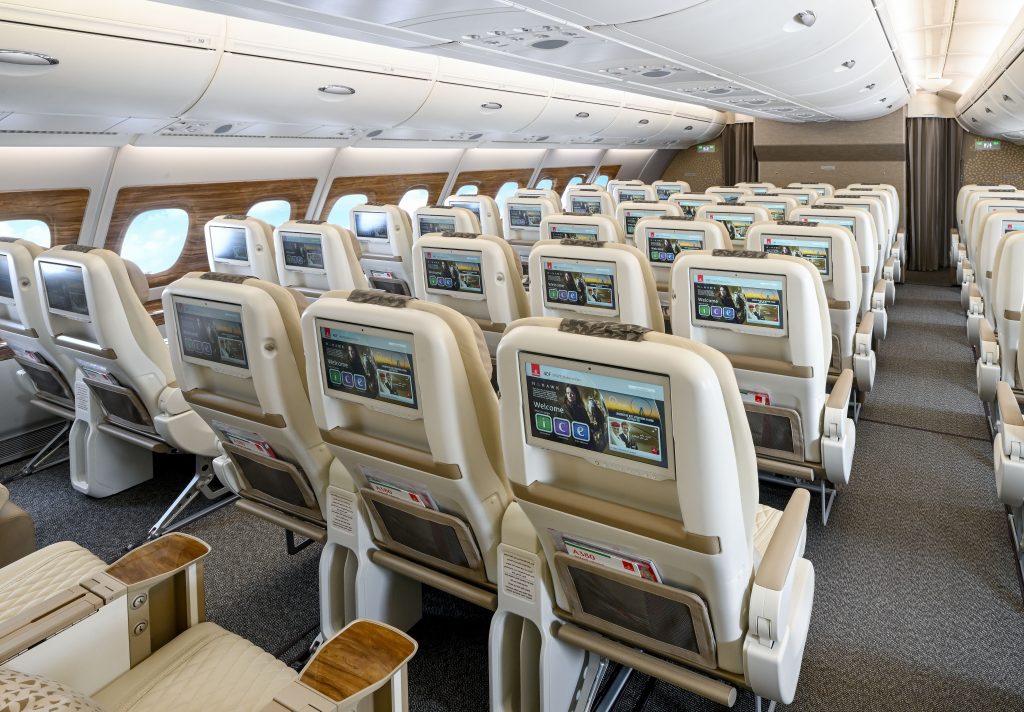
In May 2026, Emirates Engineering completed one of its most technically demanding projects yet by introducing Premium Economy on the upper deck of an Airbus A380, requiring extensive structural modifications while maintaining aircraft certification and operational integrity.
Engineering innovation
Delivering a programme of this scale has required far more than skilled craftsmanship. Emirates Engineering has developed entirely new workflows, specialised tooling and logistics systems to streamline the retrofit process. Modified catering trucks have been repurposed to transport large cabin monuments between workshops and aircraft inside the hangars.
The engineering teams have also developed dedicated digital work-tracking systems, specialised parts storage procedures and custom-built equipment that enables technicians to safely access every section of the aircraft cabin during refurbishment. More than 100 suppliers are supporting the programme, highlighting the complexity of coordinating one of the aviation industry’s largest cabin modernisation efforts. Since the project began, Emirates has successfully completed an average of 28 aircraft retrofits every year.
A cabin designed for tomorrow
The retrofit programme continues to evolve. Beginning October 2026, Emirates will enter the next phase of cabin enhancements with the introduction of 4K OLED HDR10+ seatback displays, delivering higher image quality and improved entertainment performance.
Passengers will also experience new Safran Z400 lightweight seats, alongside additional product upgrades designed to improve comfort while reducing aircraft weight and supporting greater operational efficiency. These enhancements reinforce Emirates’ long-term strategy of continuously investing in the passenger experience while maximising the value of its existing fleet.
Sustainability through circular design
Beyond passenger comfort, the programme has also embraced circular economy principles. Rather than discarding materials removed during refurbishment, Emirates has launched “Aircrafted by Emirates,” an initiative that upcycles premium leather, upholstery fabrics and other high-quality cabin materials into limited-edition travel accessories and lifestyle products.
The airline has also donated more than 4,000 backpacks manufactured from repurposed Economy Class seat fabric to children across 11 countries, giving retired cabin materials a meaningful second life. The initiative demonstrates how cabin refurbishment programmes can contribute not only to improved passenger experiences but also to broader sustainability objectives.
Commenting on the milestone, Sir Tim Clark, President of Emirates Airline, described the achievement as another step in the airline’s ongoing commitment to offering world-class products across every cabin. “Our commitment to deliver best-in-class products across every cabin is an ongoing endeavour, and completing full cabin retrofits for 100 wide-body aircraft in 44 months is a significant achievement,” he said.
Backed by a US$5 billion investment, Clark noted that the programme ensures customers continue to “fly better” through enhanced luxury, comfort and attention to detail.
He also highlighted the engineering accomplishment behind the project, noting that completing a retrofit programme of this magnitude entirely in-house required exceptional planning, craftsmanship and technical expertise. “Our team has completely rewritten the rulebook on retrofitting the two largest passenger aircraft in commercial aviation to make sure that every aircraft returns to the skies on schedule and in impeccable shape,” he added.
A new benchmark
Originally announced in 2021 to cover 105 aircraft, Emirates’ retrofit programme has steadily expanded in response to strong passenger demand. The scope grew to 191 aircraft in May 2024 before increasing further to 219 aircraft later that year, making it one of the most ambitious fleet modernisation programmes ever undertaken by a commercial airline.
More than simply extending the life of existing aircraft, the programme demonstrates how airlines are increasingly using retrofit strategies to introduce new cabin products, improve passenger comfort, integrate advanced technologies and meet sustainability goals without waiting for fleet replacement cycles.
For the global aircraft interiors industry, Emirates’ achievement represents more than a numerical milestone. It showcases how thoughtful cabin design, engineering innovation and passenger-centric investment can transform existing aircraft into next-generation travel experiences, setting a new benchmark for cabin modernisation across the aviation industry.