


Air India is on a transformational journey to give its passengers a world-class experience. The Tata’s took over India’s flag carrier Air India approximately a little over two years ago when the airline was deep in debt, overall performance was at its lowest with hardly any regard for passenger comfort. But the picture slowly began to change as Tata decided to revamp the entire airline, complete with a new look, identity, brand, and aircraft.
The airline recently concluded its two-year transformational journey called Vihaan.AI in which the airline successfully achieved many milestones like placing record aircraft orders, revamping its legacy fleet, ordering new IFE solutions, and enhancing the overall passenger experience on every Air India flight.
The airline recently flew its flagship A350 aircraft on its international debut flight from Mumbai to Heathrow with its new soft product called ‘Vista Verve’. A350 is the first new aircraft type to be introduced by any Indian airline in over a decade. For Air India which has been facing flak on many of its aging legacy fleets, these swanky planes and the new onboard experience could well be the indication that its story of transformation is finally taking off.
Of the 40 A350s ordered by the airline in 2023, six have already joined its fleet. These planes feature Air India’s new soft products including chinaware, tableware and glassware, new bedding, and updated amenity kits for Business and Premium Economy guests.
Air India began to take deliveries of its latest long-range A350 aircraft as a part of its 470-aircraft order. Let’s have a look inside these planes to see if the Air India charm really works?
From September 2024, Air India replaced its legacy Boeing 777-300ER and Boeing 787-8 Dreamliner planes on 14 of 17 weekly flights from Delhi to London Heathrow with the A350-900 aircraft.
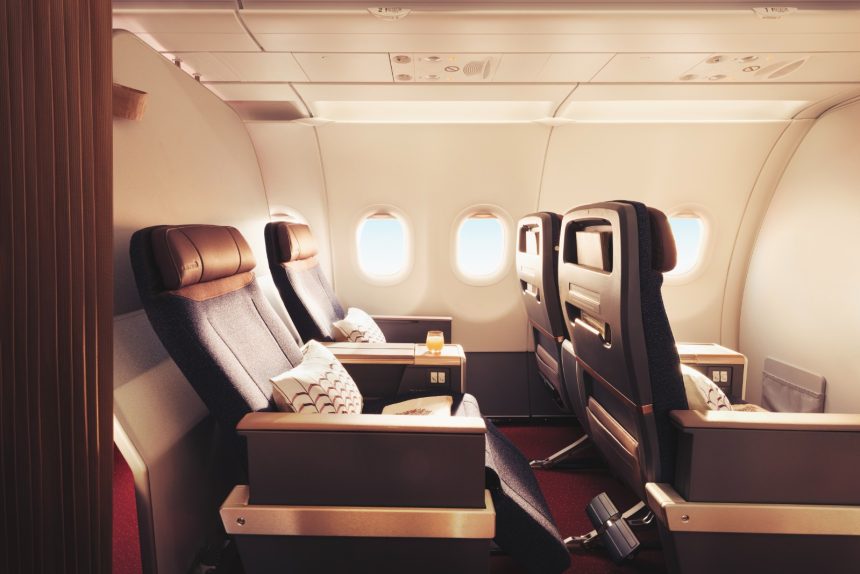
Inside the cabin, one of the first things you notice is the smartly dressed crew donning their new Manish Malhotra livery which is a major departure from the earlier Air India uniforms. The private suites in business class come with finely designed duvets, pillows, mattress covers, etc. The shiny bone china has beautiful mandala designs on the corners
The glassware is manufactured by a company in Slovakia. The airline claims that it is free from lead or any other toxins and maintains clarity over time. Unique salt and pepper shakers in an Indian tiffin box design stand out. The iconic Maharaja logo is also inlaid on some of the chinaware
The food and beverages area also displays a marked change on the flight. There is a mix of Indian and international when it comes to the menu. The A350 also features a social area between the business and premium economy cabins where a small bar has been set up.
“In the last one year, we have reviewed all F&B partners and also added new ones to ensure we have better offerings available. We have our chefs working closely with the F&B partners developing new dishes and cuisines that are of international standards,” says Rajesh Dogra, Chief Customer Experience Officer, at Air India. The other area where one can find a major change is the new inflight entertainment (IFE) system. It has about 3000 plus hours of overall content. There are more than 300 Indian movies. There are more than 100 hours of kids’ content, which is also sub-categorised for various age groups. The aircraft is also soon going to roll out the onboard wifi. All the preparations in terms of equipment have been completed and the airline is waiting for regulatory approvals which they feel shouldn’t take long.
The new Air India experience is currently only available on the UK routes. However, the airline plans to launch its soft product in all its international sectors by March 2025. The A-350 is scheduled to start flying to the US in the next few months.
“The soft product will be available across all long-haul flights and March 2025 is the likely target to do that,” adds Dogra.
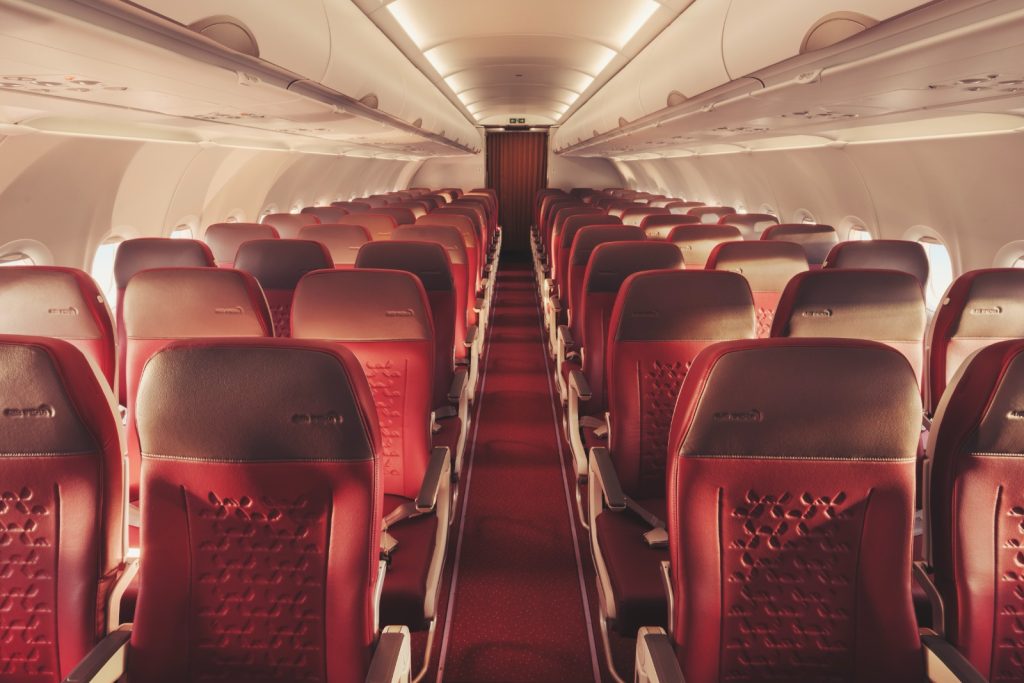
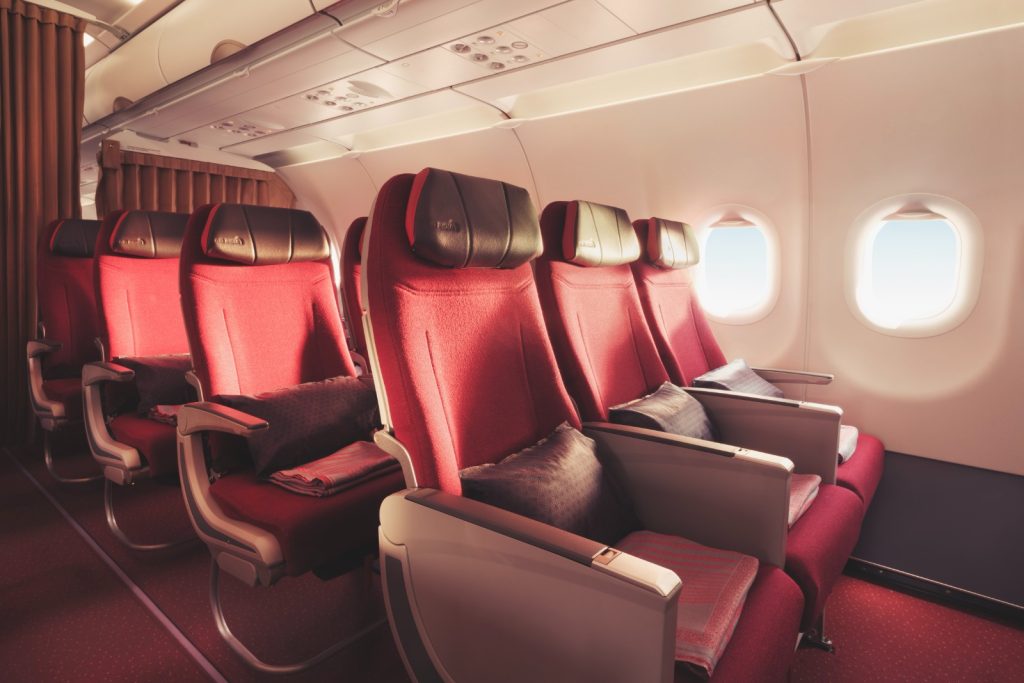
Air India’s A350-900 aircraft comes in a three-class cabin configuration with a total of 316 seats — 28 in business class, 24 in premium economy, and 264 in economy class. In a standard three-class configuration, the plane can carry up to 350 passengers and has a flight range of over 15,000 km.
Many of Air India’s existing fleet of aircraft that it inherited from the earlier management comprises older planes which are in a rundown state and due to this the airline has been facing criticism by flyers. The company has been trying to mitigate the crisis, but sourcing spare parts for older aircraft has been a major challenge due to the global supply chain issue. This month it has begun the process of sending its old planes for retrofitting and with that it hopes to gradually modernize the whole fleet in the next few years.
“By mid-2025 almost 90 per cent of our legacy fleet will have been retrofitted and also the widebody aircraft retrofitting will start mid of next year,” says Dogra.
Air India aims is to turn Air India into a “global airline with an Indian heart” and to achieve this goal, transformation at all levels has been necessary. Adopting new technologies, adding new lounges at major international airports, world-class onboard experience and improving its on-time performance remain the key focus areas.