


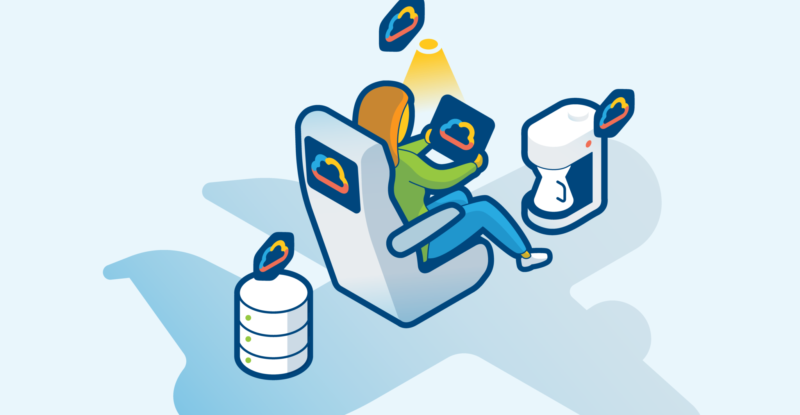
Axinom has expanded its On-Board Cloud platform beyond the aircraft’s onboard server to connect seatback screens, passenger devices, crew tablets, and other cabin equipment to the same cloud-based infrastructure.
The expansion allows individual cabin devices to operate as connected edge nodes while continuing to use the existing onboard server and cloud connection. This creates a common platform for applications and data across the cabin.
The system can support functions that link different cabin devices. For example, a seatback screen could control passenger seat functions and lighting, while live aircraft data could be delivered simultaneously to the moving map, crew tablet, and a passenger’s personal device. Cabin equipment could also send operational information to ground teams for maintenance purposes.
Axinom is using open standards, including ARINC 853 and the Cabin Secure Media-Independent Messaging (CSMIM) standard, to allow equipment from different manufacturers to exchange information.
The expanded platform includes an application launcher for seatback displays, a CSMIM broker for cabin messaging, passenger authentication for pairing personal devices with seats, and edge caching for storing frequently accessed content closer to connected devices.
Applications can be developed by airlines or third-party providers and deployed through the same platform. Airlines can manage devices, applications, and services from the ground, while the onboard infrastructure handles local delivery and data exchange.
Existing On-Board Cloud functions, including synchronization between aircraft and ground systems, fleet and device management, and deployment of services on the onboard server, remain part of the platform.
The system is designed to work with existing cabin infrastructure, including legacy equipment, and supports partial deployments. Airlines can therefore introduce the connected platform on selected aircraft or cabin areas before expanding it across the fleet.
The expanded architecture links the seatback display and other cabin devices with the airline’s cloud infrastructure, providing a common platform for inflight entertainment, passenger services, onboard commerce and crew applications.