



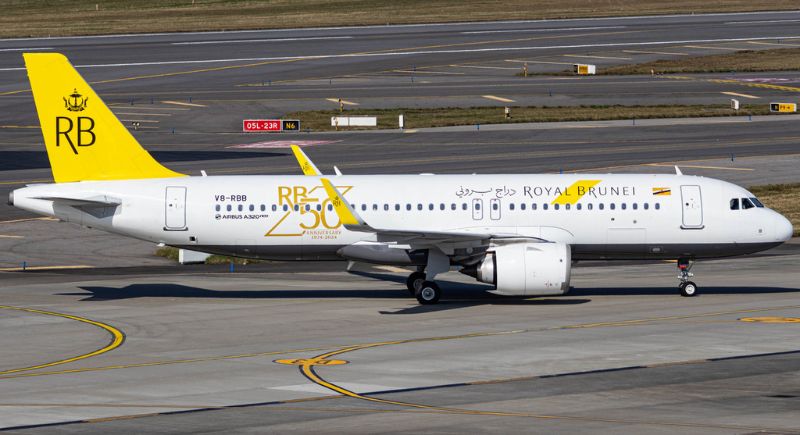
Royal Brunei Airlines (RB) is raising the bar for in-flight internet. The national carrier has chosen Intelsat’s cutting-edge multi-orbit satellite connectivity to power up its fleet of Airbus A320neos, signaling a strong move toward smarter skies and an enhanced passenger experience.
The installation program kicks off in Q4 2025. At the heart of this upgrade? Intelsat’s latest electronically steered array (ESA) antenna, a sleek, low-profile device measuring less than 7 centimetres in height. Don’t let the size fool you. This antenna packs a punch. It taps into both geostationary (GEO) and low-Earth orbit (LEO) satellites to deliver fast, reliable Wi-Fi from takeoff to landing.
“Passengers will soon enjoy the kind of internet they’re used to at home, fast, dependable, and always on,” said Mike DeMarco, Chief Commercial Officer at Intelsat. “We’re proud to help Royal Brunei bring future-ready connectivity to the skies.”
At this stage, the agreement covers only the A320neo aircraft. Royal Brunei’s Boeing 787s, which serve long-haul international routes, are not currently included, and in fact, aren’t fitted with any in-flight connectivity systems yet. That said, Intelsat is already working with Boeing to develop a Service Bulletin that could make its ESA solution viable for the 787 platform in the future.
“We see this as an important step in delivering consistently excellent service,” said Captain Sabirin Haji Abdul Hamid, CEO of Royal Brunei Airlines. “This upgrade speaks to our long-standing commitment to innovation and providing guests with seamless experiences, on the ground and in the air.”
Intelsat’s system isn’t just theoretical has already shown its effectiveness in the field, earning praise after Air Canada launched it on their CRJ900s. The company has also inked deals with a growing list of major carriers, including American Airlines, Alaska Airlines, Aerolíneas Argentinas, Japan Airlines, and Skymark.
Why all the attention? The multi-orbit approach has a few key advantages:
- Redundancy: If one satellite network faces congestion or weak coverage, the system can switch to another.
- Speed & Stability: GEO brings broad reach; LEO adds low-latency performance. Together, they keep the signal strong.
- Passenger Satisfaction: In today’s world, seamless connectivity is not just a preference; it’s an expectation.
Also Read- American Airlines elevates inflight experience with complimentary Wi-Fi for AAdvantage members
Royal Brunei Airlines, operating scheduled routes across Asia, the Middle East, Australia, and the UK, joins a growing number of regional and global carriers investing in next-gen onboard tech. Their partnership with Intelsat highlights a wider trend: airlines aren’t just competing on destinations, they’re competing on digital experiences.
At 35,000 feet, staying connected is no longer a luxury. It’s a necessity.