


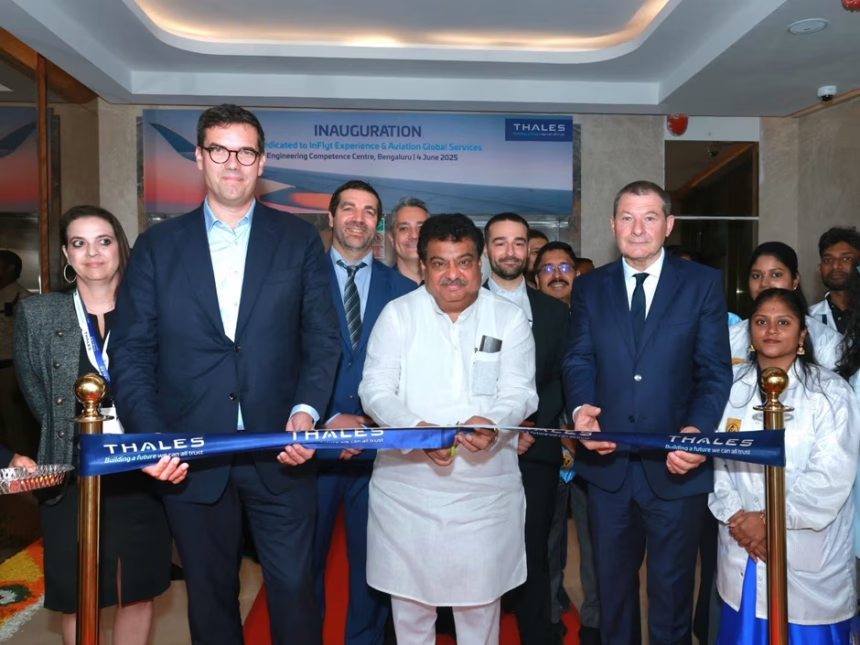
Thales has taken a significant step forward in redefining the future of inflight entertainment by launching a next-generation Inflight Entertainment (IFE) and Services Lab at its Engineering Competence Centre (ECC) in Bengaluru, India. Purpose-built to support the global commercial aviation sector, the lab serves as a dynamic hub for designing, developing, simulating, and testing advanced IFE systems, placing passenger experience at the core of innovation.
This high-tech facility is designed to replicate the cabin environment of a modern aircraft equipped with the latest IFE systems. With an immersive setup and real-time simulation tools, the lab provides a platform for rigorous software development, system testing, and end-to-end validation, allowing airline partners to refine user interfaces, optimize content delivery, test connectivity features, and ensure hardware-software integration with minimal latency and maximum reliability.
Focused on Next-Gen Passenger Experience
The lab’s capabilities are aligned with evolving passenger expectations and airline needs for hyper-personalized, connected inflight experiences. As carriers expand their digital offerings from streaming content and e-commerce to real-time flight information and in-seat services, Thales’s facility is engineered to support this transformation through:
- Advanced UX and UI development tools that simulate varying cabin classes and passenger profiles.
- Seamless testing of high-speed connectivity integration, supporting both satellite and air-to-ground solutions.
- Real-world content management system (CMS) environments for testing multi-language, multi-region media deployment.
- Cybersecurity testing zones for encrypted data flow, ensuring passenger and airline data protection.
- Modular test rigs that allow hardware testing of displays, remote controls, head-end servers, and network switches under operational load conditions.
By providing a controlled yet flexible testing environment, Thales enables faster innovation cycles and reduces the time from concept to cabin. The lab will serve as a critical backend support for Thales’s global airline customers, particularly as aircraft cabins become smarter, more interactive, and more data-driven.
Global Engineering Meets Local Expertise
Strategically located in India’s tech capital, the lab leverages both Thales’s global technological expertise and India’s growing digital talent pool. The Engineering Competence Centre in Bengaluru has long served as a nucleus for avionics, connectivity, and cabin systems development, and this IFE-focused expansion significantly enhances its R&D depth and scope.
Olivier Flous, Senior Vice President of Engineering & Digital Transformation at Thales, commented: “This new lab underscores our commitment to pioneering intelligent in-flight entertainment systems that enrich the passenger journey. It also exemplifies our investment in scalable, agile development environments that can adapt to the unique operational and branding needs of airlines around the world.”
Supporting IFE’s Role in Airline Differentiation
As airlines increasingly look to cabin interiors and digital engagement as differentiators in a competitive market, IFE systems are no longer viewed as optional amenities, they are essential components of brand identity and revenue strategy. With more airlines opting for custom-branded portals, e-commerce integrations, biometric-linked content personalization, and seamless second-screen experiences, the complexity of system integration and testing continues to rise.
Also read- Air India partners with Vobble to elevate In-Flight entertainment for young flyers
Thales’s Bengaluru lab positions the company to deliver agile, customizable, and future-ready IFE solutions, not only meeting airline needs for high uptime and rapid deployment but also anticipating future trends like AR/VR onboard content, predictive maintenance of cabin components, and AI-driven passenger behavior analytics.
A Future-Facing Ecosystem for Cabin Innovation
By expanding its infrastructure in India, Thales is reinforcing its global vision to build a sustainable and intelligent cabin ecosystem, powered by real-time data, intuitive design, and robust engineering. As the industry shifts towards more connected and experience-centric cabin environments, this facility serves as a key enabler in shaping what passengers will expect and demand at 35,000 feet.