



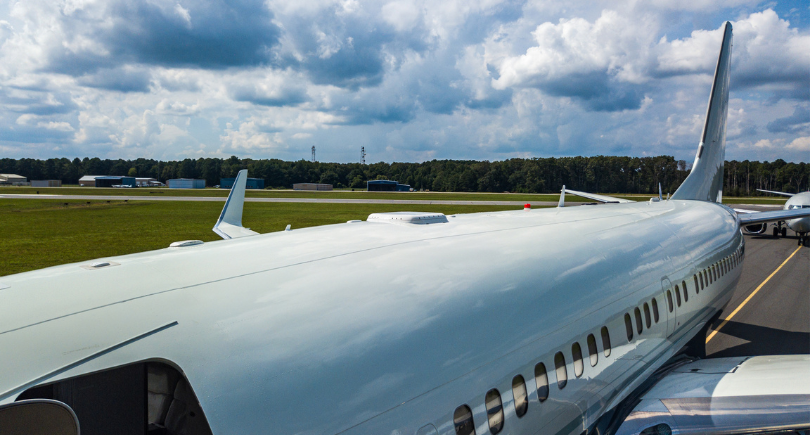
Gogo has achieved another connectivity milestone with the Federal Aviation Administration (FAA) issuing the first Supplemental Type Certificate (STC) for the Gogo Galileo FDX terminal, developed in partnership with ALOFT AeroArchitects. The approval covers Boeing Business Jet (BBJ) 737-series aircraft, with expansion to BBJ 737 MAX variants planned next.
The inaugural installation has already been completed on a Boeing BBJ 737-700IGW, marking the first aircraft globally to feature the FDX system. The installation also includes activation of FlightDeck Freedom (FDF), Gogo’s cockpit datalink service, providing pilots with flight tracking, real-time weather data, trip planning tools, and geo-notifications for improved operational awareness.
“This first FDX STC marks another major milestone as we strive to deliver multi-orbit, multi-band connectivity for all types of aircraft,” said Chris Moore, CEO of Gogo. “It demonstrates that Gogo remains the only company capable of delivering complete nose-to-tail connectivity solutions from a single provider.”
Also Read – Redefining the onboard retail experience with AirMall
Leveraging the Eutelsat OneWeb low-earth orbit (LEO) network, the FDX terminal delivers download speeds up to 195 Mbps and upload speeds up to 32 Mbps, enabling passengers to enjoy high-speed internet for streaming, conferencing, and browsing. The solution is optimized for super-midsize, long-range, and executive airliner aircraft.
“Despite being our first installation, the system was straightforward to fit,” added Scott Meyer, CEO of ALOFT AeroArchitects. “Achieving the first Gogo Galileo FDX STC is a proud milestone, and we look forward to supporting future installations.”
The system’s two line-replaceable units, a flat-panel electronically steered antenna (ESA), and an SDR Gateway or AVANCE router allow for minimal downtime and easy upgrades. EASA approval for the BBJ STC is expected later this year.
The milestone follows Gogo’s FAA STC approval for the Galileo HDX system on the Dassault Falcon 2000 series, announced in September 2025, further underscoring the company’s steady progress in expanding its LEO-based connectivity portfolio across business aviation platforms.