


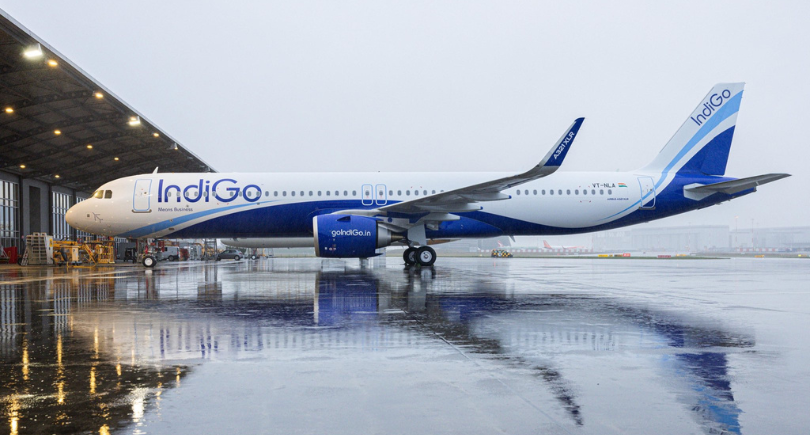
India’s largest carrier IndiGo is set to introduce its Airbus A321XLR on the Delhi–Istanbul route from April 19, replacing the current one-stop operation with a non-stop service and signalling a notable shift in narrowbody long-haul cabin strategy.
The deployment positions the A321XLR as a key enabler in IndiGo’s international expansion, while also redefining passenger experience expectations on medium- to long-haul narrowbody operations.
The Airbus A321XLR represents the latest evolution in the A320 family, designed specifically to bridge the gap between traditional short-haul narrowbody operations and long-haul widebody missions.
With significantly extended range, the aircraft allows airlines like IndiGo to operate direct international routes that previously required either widebody aircraft or technical stops. On the Delhi–Istanbul sector, this translates into a fully non-stop journey, eliminating the earlier halt at Jeddah and enhancing overall passenger convenience.
From an interiors perspective, the A321XLR is increasingly becoming a platform for airlines to experiment with hybrid cabin offerings—balancing density with comfort on longer sectors.
Dual-class configuration signals product evolution
For the first time on this route, IndiGo will introduce a dual-class cabin configuration:
- 183 Economy seats, maintaining the airline’s high-density, cost-efficient model
- 12 IndiGoStretch seats, forming a dedicated premium cabin offering enhanced legroom and comfort
This configuration reflects a broader trend among low-cost carriers entering longer-haul markets, introducing segmented cabin products to cater to evolving passenger expectations without fully transitioning to traditional full-service models.
The addition of IndiGoStretch is particularly significant from a cabin design standpoint, as it introduces differentiated seating zones within a narrowbody platform, requiring careful optimisation of space, service flow, and onboard experience.
Cabin comfort and passenger experience enhancements
The A321XLR platform brings inherent improvements in passenger comfort compared to earlier-generation narrowbodies. These include:
- Optimised cabin pressurisation and environmental control systems for reduced fatigue on longer flights
- Improved fuel efficiency, enabling quieter operations and potentially smoother flight profiles
- Enhanced cabin layout flexibility, allowing airlines to tailor interiors for longer missions
For passengers, this translates into a more comfortable journey despite the aircraft’s single-aisle configuration—an important consideration as narrowbodies increasingly operate flights of six to eight hours or more.
Strategic shift from widebody reliance
IndiGo’s move to deploy the A321XLR also reflects a transition away from its earlier reliance on wet-leased widebody aircraft, including Boeing 777s sourced through its partnership with Turkish Airlines.
While widebodies traditionally offer greater cabin space and capacity, the A321XLR provides a more flexible and cost-efficient alternative for routes with moderate demand. From an interiors standpoint, this shift underscores the growing capability of narrowbody cabins to deliver acceptable comfort levels on longer routes, provided the configuration is well optimised.
Connectivity and network integration
Beyond the onboard experience, the Delhi–Istanbul route remains strategically important due to its connectivity potential. Through its codeshare with Turkish Airlines, IndiGo passengers gain access to over 50 onward destinations, making Istanbul a key transfer hub.
This further elevates the importance of cabin experience consistency, as passengers increasingly compare narrowbody long-haul segments with traditional widebody offerings on connecting flights.
IndiGo’s A321XLR deployment highlights several broader trends shaping the aircraft interiors segment:
- Rise of long-range narrowbody cabins with hybrid configurations
- Increased focus on premiumisation within low-cost models
- Greater emphasis on comfort optimisation for longer flight durations
- Flexible cabin architectures supporting varied route profiles
As more airlines adopt the A321XLR, the aircraft is expected to play a central role in redefining how interiors are designed for mid- to long-haul markets, particularly in high-growth regions such as Asia and the Middle East.
Outlook
With this deployment, IndiGo not only strengthens its international network but also takes a measured step toward evolving its onboard product. The A321XLR’s combination of range, efficiency, and cabin flexibility positions it as a critical asset in the airline’s long-term strategy.
For the interiors ecosystem, the aircraft’s growing adoption reinforces a key shift: the future of long-haul travel will not be defined by widebodies alone, but increasingly by how effectively narrowbody cabins can be adapted to deliver comfort, efficiency, and differentiation.