


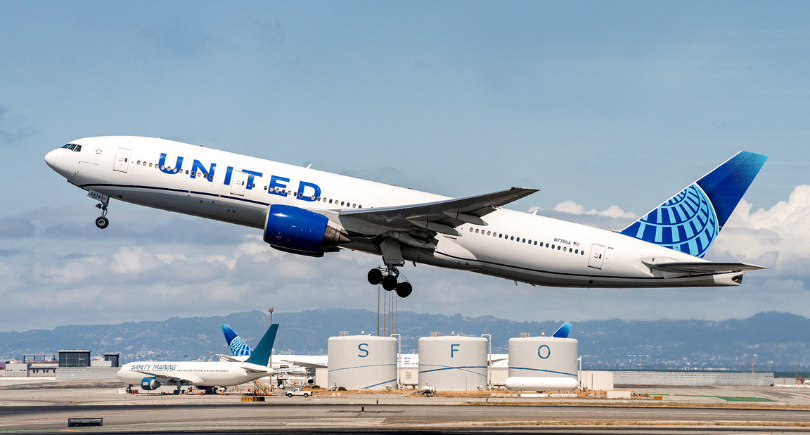
United Airlines has reached a significant milestone in its inflight connectivity strategy with the launch of its first customer-operated transatlantic widebody flight equipped with Starlink Wi-Fi, extending next-generation internet access to long-haul international passengers.
The inaugural service, United Flight 14 from Newark to London Heathrow, operated on a Boeing 777-200 fitted with Starlink’s low-Earth-orbit (LEO) satellite technology, marking the beginning of a broader rollout across the airline’s widebody fleet.
The move represents another step in the aviation industry’s ongoing transformation of the passenger experience, where reliable, high-speed connectivity is increasingly viewed as a core cabin offering rather than an optional amenity.
Bringing connectivity to long-haul travel
United plans to equip nearly 60 widebody aircraft with Starlink technology by the end of the year and complete installations across its entire widebody fleet by summer 2027.
The deployment will enable passengers flying on some of the airline’s longest international routes to remain connected throughout their journey, including flights traversing oceans, polar regions and other remote areas where traditional inflight connectivity solutions have historically faced coverage limitations.
By leveraging Starlink’s expanding satellite constellation, United aims to provide a more seamless internet experience that supports everything from web browsing and streaming to gaming, video conferencing and productivity applications.
Enhancing the passenger experience
The introduction of Starlink on long-haul aircraft is expected to significantly enhance the onboard experience for both leisure and business travellers. As passenger expectations continue to evolve, airlines are increasingly investing in digital cabin technologies that replicate the connectivity experience customers are accustomed to on the ground. High-speed internet access has become particularly important for premium travellers, remote workers and international passengers seeking uninterrupted connectivity during extended flights.
According to United, more than 18.6 million passengers have already travelled on Starlink-equipped aircraft since the service was introduced, with travellers connecting nearly 9.9 million devices across more than 311,000 flights.
The strong adoption rates highlight growing demand for reliable inflight connectivity and reinforce its role as a key differentiator in airline product offerings.
Expansion
Passengers travelling on international services from United’s major hubs in Newark/New York, Washington D.C., Houston and San Francisco will increasingly encounter Starlink-equipped Boeing 777-200 aircraft operating on routes to destinations including London, Frankfurt, Paris, Amsterdam, Zurich, Buenos Aires and Tokyo.
The expansion is expected to benefit a broad range of travellers by providing consistent internet access across the airline’s global network, regardless of geography or route complexity.
Cabin Technology Investment
The Starlink rollout forms part of United’s wider investment in onboard technology and passenger experience enhancements.
Alongside connectivity improvements, the airline continues to expand its cabin entertainment infrastructure and currently operates more than 167,000 seatback screens across nearly 900 aircraft. This figure is expected to grow further as new aircraft join the fleet and cabin modernisation programmes continue.
The combination of advanced connectivity and expanded entertainment options reflects a broader industry trend toward creating more digitally connected and personalised passenger experiences.
Connectivity becoming a competitive differentiator
Across the global airline industry, inflight connectivity is rapidly evolving from a premium feature into a standard expectation. Airlines are increasingly viewing cabin connectivity as a strategic investment capable of improving customer satisfaction, strengthening loyalty programmes and generating ancillary revenue opportunities.
For United, the deployment of Starlink across its widebody fleet strengthens its position among carriers investing heavily in next-generation cabin technologies and digital passenger engagement.
As airlines continue to redefine the inflight experience, reliable high-speed connectivity is emerging as one of the most important elements of the modern aircraft cabin, particularly on long-haul international routes where passengers expect to remain productive, entertained and connected throughout their journey.
For MileagePlus members travelling on Starlink-enabled aircraft, the service is available free of charge, further enhancing the value proposition as United continues to expand access across its global fleet.