


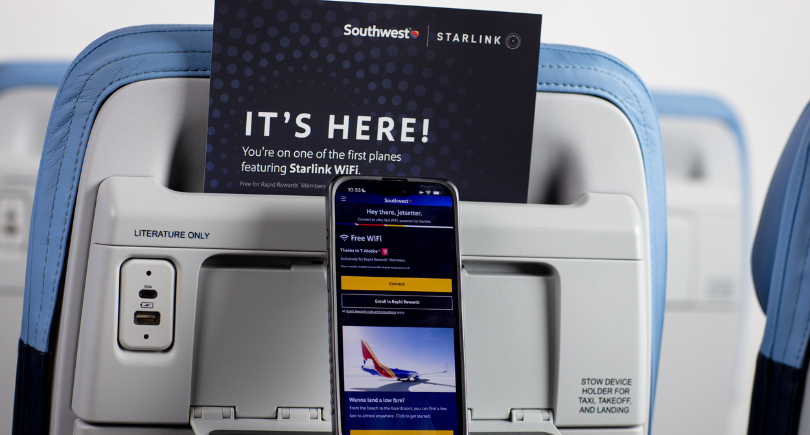
Southwest Airlines has placed its first Starlink-equipped aircraft into commercial service, marking the start of a broader fleetwide rollout of high-speed inflight connectivity aimed at enhancing the passenger experience.
The aircraft entered service on 22 June, operating a flight between Dallas and Albuquerque. The milestone represents Southwest’s first deployment of SpaceX’s Starlink satellite internet system, which is designed to provide passengers with significantly faster and more reliable onboard connectivity.
According to the airline, Starlink’s low-Earth orbit satellite network will enable passengers to access broadband-level internet speeds in flight, supporting activities such as video streaming, live sports viewing, online gaming, document sharing, large file uploads and real-time collaboration.
Also Read – How Air India is building a world-class passenger experience
“Starlink delivers a new era of inflight connectivity to Southwest,” said Tony Roach, Chief Customer and Brand Officer at Southwest Airlines. “This ultra-fast WiFi brings an at-home experience to the air and redefines how customers can stay connected, be productive and make the most of their time while flying.”
The carrier plans to begin retrofitting additional aircraft with Starlink equipment throughout the summer, with the goal of expanding high-speed connectivity across its network. The rollout forms part of a wider industry trend as airlines seek to meet growing passenger expectations for seamless digital connectivity comparable to ground-based internet services.
Southwest said Starlink-powered connectivity will be available free of charge to Rapid Rewards members through its partnership with T-Mobile, further supporting passenger engagement and loyalty initiatives.
The deployment adds Southwest to a growing list of airlines adopting next-generation low-Earth orbit satellite connectivity solutions, which are increasingly viewed as a key component of the modern cabin experience. For aircraft operators, the technology offers the potential to improve passenger satisfaction while supporting a broader range of connected services onboard.