


Boeing’s 777X, the world’s largest twin-engine jet, is moving closer to service entry with a new cabin design that blends proven 777 reliability with Dreamliner-inspired comfort. Originally due in 2020, the 777X is now expected to debut in 2026, with Lufthansa slated to be the launch customer. Despite delays, demand remains strong, with Emirates, Qatar Airways, Etihad, British Airways, Cathay Pacific, and Singapore Airlines among the major operators preparing to introduce the aircraft.

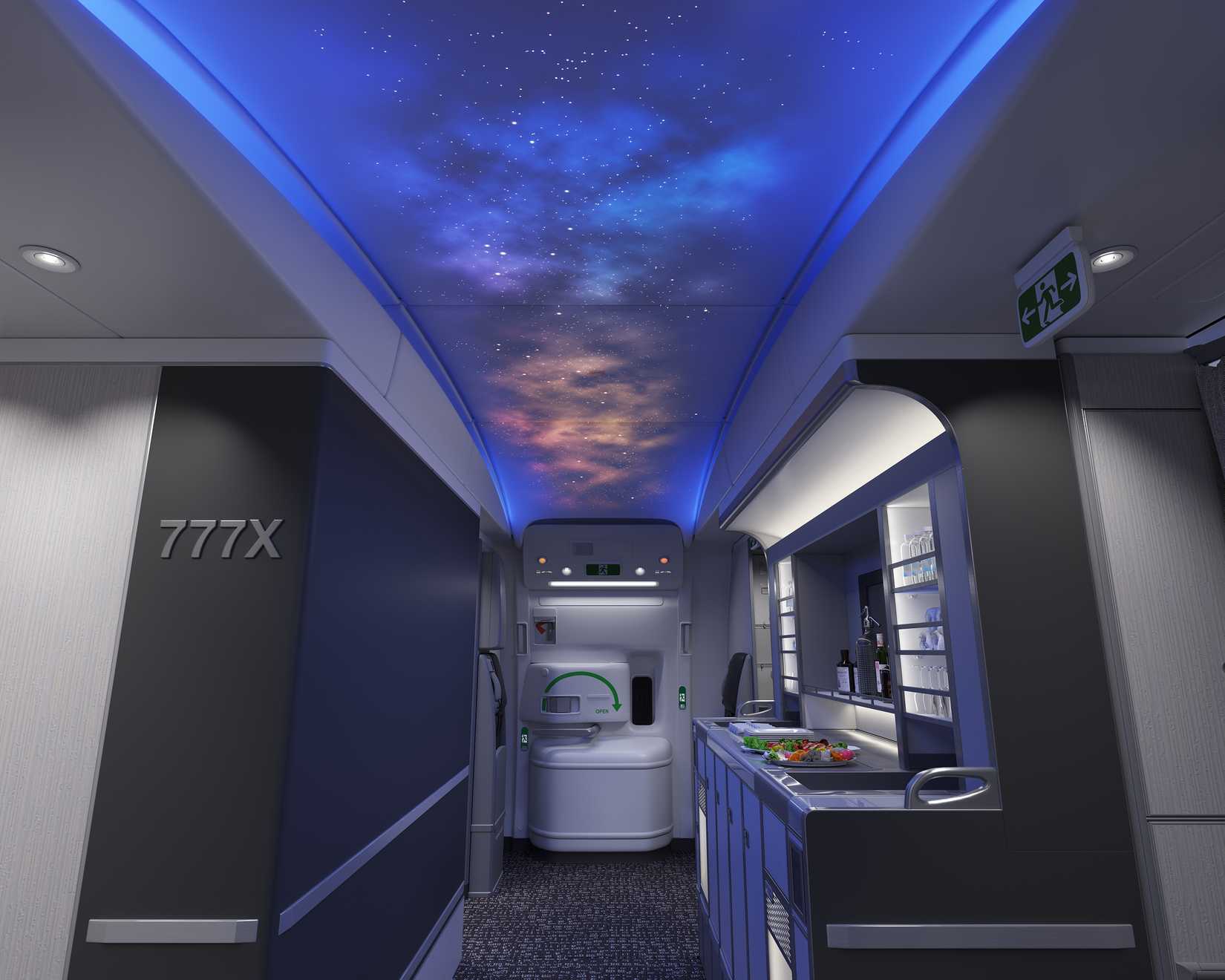
The 777X interior has been engineered to address evolving passenger expectations for wellness, space, and flexibility. Features include windows that are 16% larger than on previous 777 models, positioned higher for improved outside views; a cabin altitude pressurized to 6,000 feet to reduce fatigue; improved humidity levels for passenger comfort; and a quieter environment thanks to advanced insulation and GE9X engines. LED lighting is fully programmable, allowing airlines to replicate natural daylight or create bespoke moods, while the wider cabin cross-section supports economy seating up to 18 inches wide. Larger concave overhead bins add storage and create a greater sense of openness.

Boeing developed the cabin in collaboration with design partner Teague, incorporating modular architecture that allows airlines to adapt layouts with greater efficiency. Operators can switch between high-privacy business-class suites, expanded premium economy, or alternative configurations without extensive refits, a flexibility designed to ensure long-term competitiveness.
Also Read- LOT’s A220s to feature RECARO R2 Seats, Airspace Cabin
These enhancements are paired with engineering advances, including folding wingtips, lighter composite materials, and the record-breaking GE9X engines, delivering double-digit reductions in per-seat fuel burn compared to the 777-300ER. For airlines, the 777X is positioned as a replacement for both aging twinjets and larger, less efficient four-engine aircraft like the Airbus A380, while offering passengers a markedly improved onboard experience.
With certification testing underway and entry into service targeted for 2026, the 777X is poised to redefine long-haul travel by combining efficiency, adaptability, and next-generation passenger comfort in one of the most anticipated cabins in commercial aviation.