


For decades, long-haul air travel has come with an unspoken compromise, especially for economy passengers. You prepare for the journey, carry your travel pillow, download your shows, and tell yourself you will manage. But somewhere over the ocean, as the cabin quiets and lights dim, reality sets in. Sleep becomes fragmented, comfort becomes negotiable, and arrival often comes with exhaustion rather than excitement.
In an industry where premium cabins have traditionally defined comfort, the question has long remained, can meaningful rest ever become part of the economy experience?
Air New Zealand believes it can and is taking a decisive step to prove it.
A world-first concept takes flight
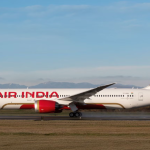
In what could mark a significant shift in cabin design philosophy, Air New Zealand’s Economy Skynest will open for bookings on May 18, 2026, with entry into service from November aboard its new Boeing 787-9 Dreamliner aircraft.
Positioned as a world-first innovation, Skynest introduces lie-flat sleeping pods specifically designed for Economy and Premium Economy passengers, effectively democratising an experience that has, until now, remained exclusive to premium cabins.
The initial rollout will be on the ultra-long-haul route between New York (JFK) and Auckland (AKL), one of the longest commercial flights globally. It is a route that not only tests aircraft endurance but also passenger resilience, making it the ideal proving ground for such a concept.
Engineering rest into the cabin architecture
At its core, Skynest is a design response to a very human need: sleep.
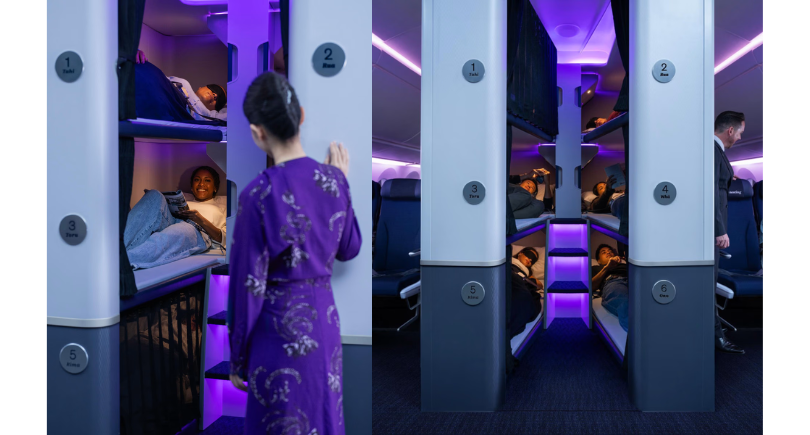
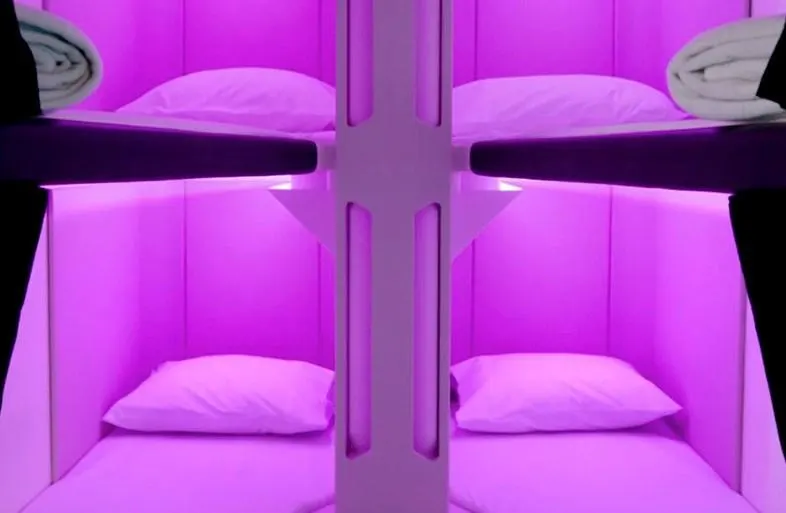
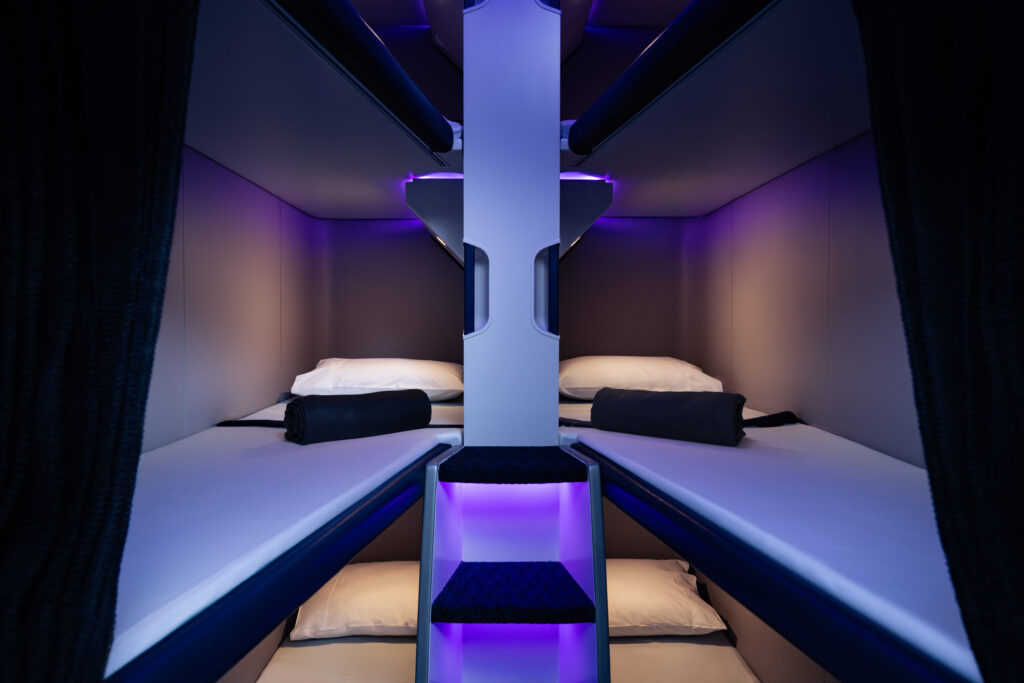
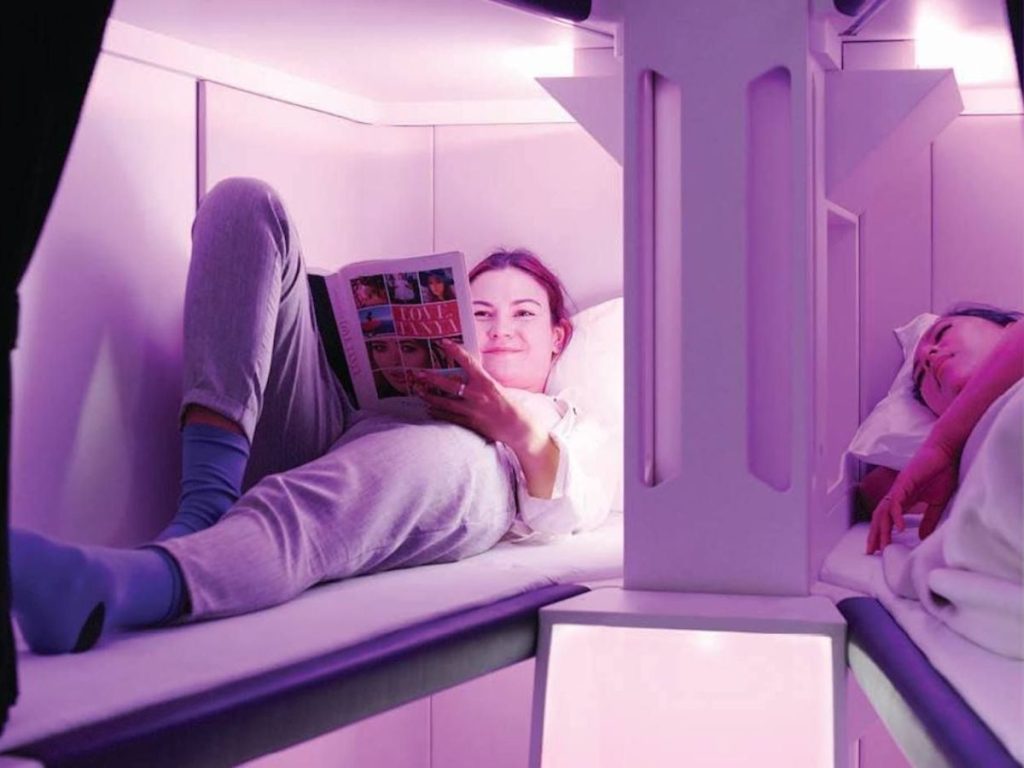
Developed over several years and refined through testing with more than 200 customers, the system comprises six lie-flat pods arranged in a compact, bunk-style configuration, located between the Economy and Premium Economy cabins. This spatial integration is significant, reflecting a careful balance between cabin density and passenger well-being.
Each pod is designed as a dedicated rest environment, featuring:
- A full-length lie-flat mattress with fresh bedding for every session
- Ambient lighting calibrated to support relaxation
- Cooling ventilation for individual comfort
- USB charging ports and reading lights
- A privacy curtain to create a personal sleep space
- A safety restraint system for in-flight compliance
Complementing the physical design is a curated “Nestcessities” amenity kit, including an eye mask, socks, earplugs, skincare, and dental essentials—reinforcing the sleep-first philosophy behind the product.
Built around the science of sleep
Unlike conventional seating upgrades, Skynest is not about incremental comfort; it is structured around sleep cycles.
Passengers will be able to book the pods in dedicated time slots, with each session designed to last long enough to allow the body to transition through natural sleep phases. This ensures travellers can not only fall asleep, but also wake gradually, reducing the grogginess often associated with interrupted rest.
Initially, two sessions will be available per flight, allowing multiple passengers to access the facility during the journey.
As Nikhil Ravishankar notes, the concept is rooted in the airline’s deep understanding of long-haul travel dynamics. For a geographically isolated nation like New Zealand, improving the journey experience is not just a product decision; it is a strategic necessity.
From innovation to experience, a broader cabin rethink
Skynest does not exist in isolation; it is part of a wider cabin transformation programme on Air New Zealand’s new Dreamliners.
The airline continues to evolve its earlier innovations, such as the Skycouch, which allows a row of economy seats to convert into a flexible flat surface. While Skycouch offered adaptability, Skynest introduces a more structured, purpose-built solution for rest.
Beyond Skynest, the redesigned cabin ecosystem reflects a holistic approach to passenger comfort:
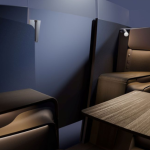
- Business Premier Luxe introduces fully enclosed suites with enhanced privacy and companion dining capability
- Premium Economy features fixed-shell seating, allowing recline without impacting passengers behind
- Economy Class benefits from improved ergonomics, enhanced stowage, and larger 13.3-inch inflight entertainment screens
- The introduction of the Sky Pantry provides a self-service space for snacks and hydration, supporting passenger autonomy during long flights
Together, these elements signal a shift from seat-centric design to experience-centric thinking.
Redefining expectations for economy travel
What makes Skynest particularly compelling is not just the product itself, but what it represents.
For the first time, economy passengers are being offered a structured opportunity to lie flat, not as an upgrade, but as an optional extension of their journey experience. It challenges long-standing cabin hierarchies and introduces a new layer of flexibility in how airlines can monetise comfort without fundamentally altering seat configurations.
More importantly, it acknowledges a simple truth: on ultra-long-haul routes, rest is not a luxury, it is a necessity.
A small space, a big shift
In many ways, Skynest is a modest intervention, just six pods within a widebody aircraft. Yet its implications are far-reaching.
It signals a future where airlines may increasingly look beyond traditional seating models to address passenger well-being. Where cabin innovation is not just about adding more features, but about solving real, lived challenges of travel.
And for passengers, it offers something deeply personal.
The next time they board a 17-hour flight, they may no longer have to brace themselves for discomfort. Instead, they could have the option to step away, lie down, and truly rest arriving not just at a destination, but in a better state to experience it.
In the evolving narrative of aircraft interiors, that may well be one of the most meaningful upgrades yet.