


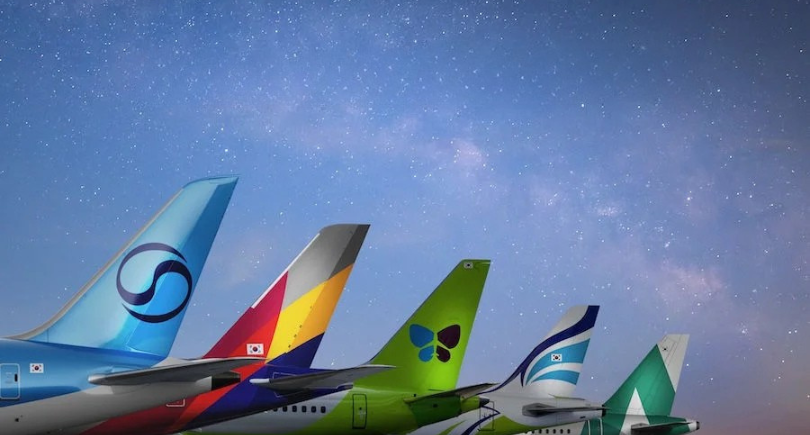
In a major boost to South Korea’s inflight connectivity sector, Korean Air and fellow Hanjin Group carriers, Asiana Airlines, Jin Air, Air Busan, and Air Seoul, have committed to deploying Starlink high-speed Wi-Fi across their fleets. The move marks the first adoption of SpaceX’s low Earth orbit (LEO) satellite technology by a South Korean airline and represents a significant step toward a unified passenger experience ahead of the Korean Air–Asiana integration.
Starlink’s LEO network, now comprising more than 8,000 satellites orbiting at roughly 550 km, promises faster and more responsive connectivity than traditional GEO-based systems positioned over 35,000 km away. Passengers can expect peak speeds of up to 500 Mbps, enabling activities such as video streaming, cloud-based work, video calling, online gaming, and shopping across all cabins.
Installation preparation and testing will begin later this year, with rollout timelines varying by carrier. The first passenger flights offering Starlink service could appear as early as Q3 2026.
Also Read- ATR’s new Business Class to launch with Air Cambodia
Korean Air and Asiana Airlines will focus initial installations on their long-haul Boeing 777-300ER and Airbus A350-900 fleets, with a target of fleetwide completion by the end of 2027. Jin Air will prioritize its Boeing 737-8 aircraft, while Air Busan and Air Seoul are currently reviewing their fleets to determine installation order.
“Connectivity is an essential part of the travel experience, and with Starlink, our customers will enjoy fast and seamless internet in the air,” a Korean Air representative said, noting the airline’s ambition to strengthen its global passenger experience offering.
Chad Gibbs, Vice President of Starlink Business Operations at SpaceX, added: “We’re excited to bring industry-leading high-speed in-flight Wi-Fi to Korean Air and Hanjin Group airlines. With Starlink onboard, passengers can work, stream, and game just as they would on the ground.”
The multi-airline deployment positions Korean Air Group among a growing number of global carriers transitioning to LEO-powered IFC as expectations for bandwidth, reliability, and consistency continue to rise.